The Legend of Sleepy Hollow
Autumn is that special time of year when the leaves begin to turn color, the air becomes a little crisper, and tales of the supernatural start to abound. One such tale, and reportedly one of the most popular in the United States, being boasted as America's first scary story, is The Legend of Sleepy Hollow, by Washington Irving. The Legend of Sleepy Hollow originally published in 1820 is a short story renowned across the world for its spooky and cozy setting, and for bringing to life the haunting image of a headless horseman! Many people will most likely read the story in high school when they are first introduced to the famous American author, Washington Irving, but some people may not realize that Sleepy Hollow is as real of a location as New York City and, in fact, resides only 31 miles from the Big Apple.
But what is Sleepy Hollow like in person? How does it connect with the story written about it almost 205 years ago? And how can we as readers and travelers explore such an integral part of American literary history?


History
One of the most important aspects to the legend of Sleepy Hollow is the Revolutionary War. Sleepy Hollow being very close to the British captured New York city at the time of the revolution found itself to be in great turmoil. Sleepy Hollow is also located only 10 miles away from White Plains, New York where Washington and his troops retreated after the initial loss of New York City.
The main antagonist of the legendary tale also just so happens to be a Hessian soldier (German soldiers or mercenaries hired by England to help fight the Revolutionary War). These soldiers at the time were greatly feared. England had sent them over by the thousands with an estimated 30,000 in total being sent over the course of the war. The Hessians were rumored to be bloodthirsty and brutal soldiers, reportedly offering no Quarter (those who surrender will not be taken prisoner and will instead be killed) to American troops in retreat, and disturbingly, true or otherwise, had stories spread about them nailing Patriot soldiers to trees with their bayonet. Not only were the Hessians greatly feared, they were in the area of the Hutson Valley having been the cause of American defeat during the battle of White Plains in October of 1776 (American Battlefield Trust: White Plains). With all of this in mind, it is easy to see and understand how the idea of the vengeful spirit of a dead Hessian soldier could have frightened individuals who had experienced the Revolutionary War firsthand less than 30 years prior (Village of Sleepy Hollow New York).
Also of historical interest, though less connected with the long-loved Legend of Sleepy Hollow, Tarrytown was where the famous Major John Andre was captured in 1780 as a spy by patriate militiamen. Found on his person were plans for West Point. He had been taking this information to the notorious Benedict Arnold when he was captured, later being hanged in the town of Tappan, only ten miles from Tarrytown, across the Hudson (Sleepy Hollow - Tarrytown Chamber of Commerce).
The history of Terrytown and Sleepy Hollow does not end with the aftermath of the Revolution. The area, renowned for its beauty and close proximity to New York City, became a popular destination for the summer homes of some of the most popular names of the Gilded Age such as Rockefeller, Carnegie, and Aster. A number of large mansions in the area ranging across time periods showcase the changing styles and individual tastes of each occupant. These homes include Lyndhurst (Jay Gould), Kykuit (John D. Rockefeller), The Armour-Stiner Octagon House (Paul Armour), Sunnyside (Washington Irving), and the Philipsburg Manor (Adriaen van der Donck).
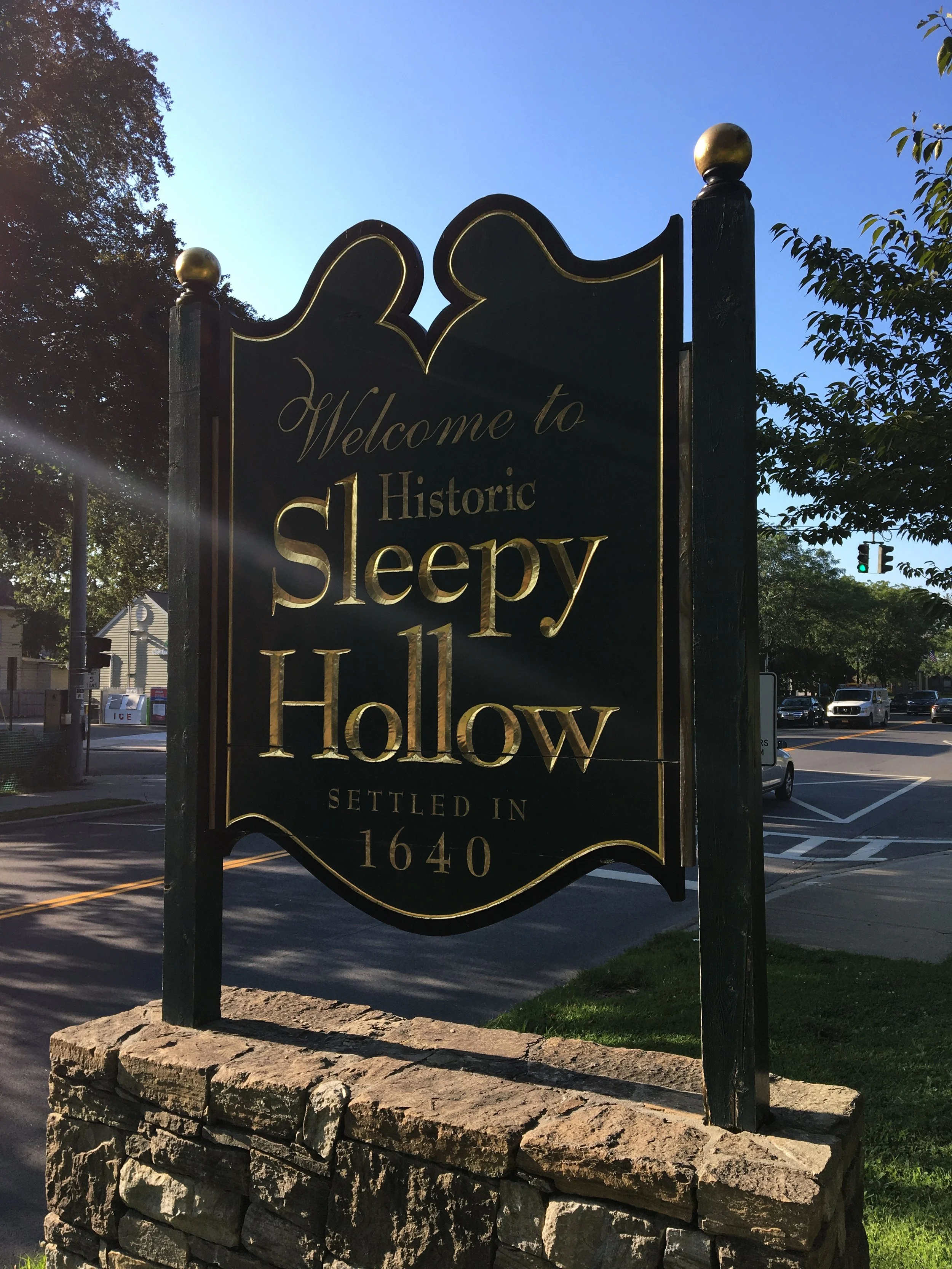
In 1609 the territory that now makes up the state of New York belonged to the Weckquaesgeck Indians. It is unclear when exactly the Dutch settlers first arrived in the territory, and it was reported that for the first 30 to 40 years of Dutch settlement, the two peoples got along at least somewhat peacefully. However, by 1643, peace had fallen by the wayside and the Dutch were found to be at war with the Weckquaesgeck Indians, as well as other Indian tribes in the territory.
In 1665 England arrived in the New Netherlands, seizing the Dutch colony and renaming it New York. A Dutchman by the name of Frederick Philipse, with the permission of England began to purchase land in the Hudson Valley region, eventually building a mansion and becoming the first Lord of the region and began to build the towns of Tarrytown and Sleepy Hollow. Somewhere during this time, the old Dutch Church (a famous Sleepy Hollow landmark) was built. It is rumored that some of the church pews were built by Frederick Philipse’s own hands. This is also where the beautiful and legendary Sleepy Hollow cemetery is.
Nestled along the winding roads of the cemetery and tucked in the overgrown forest lay a number of famous individuals from across history, to include a number of Rockefellers, Astors, and Carnegies, as well as the man renowned for putting Sleepy Hollow on the map, Washington Irving.
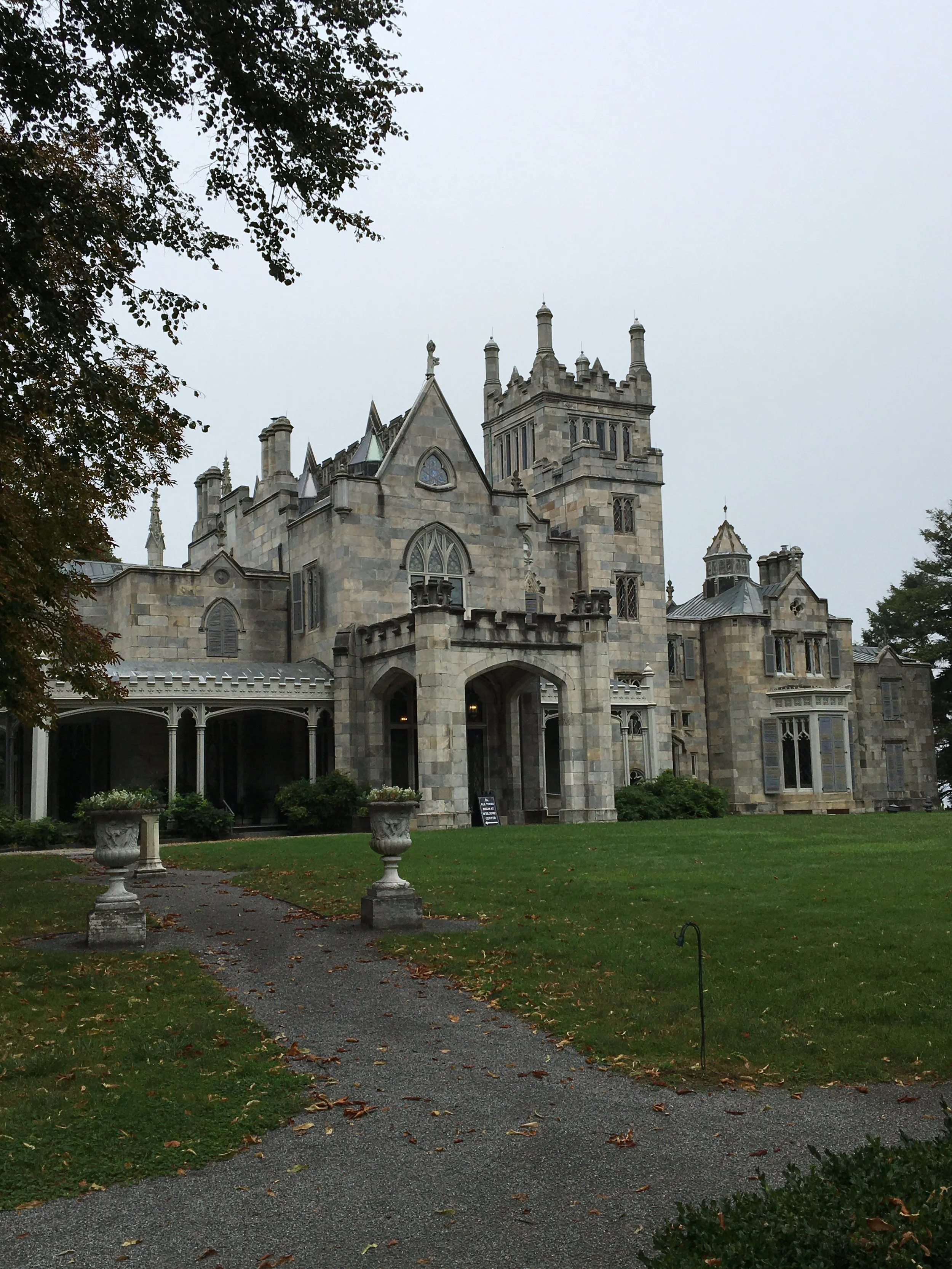
Lyndhurst, NY
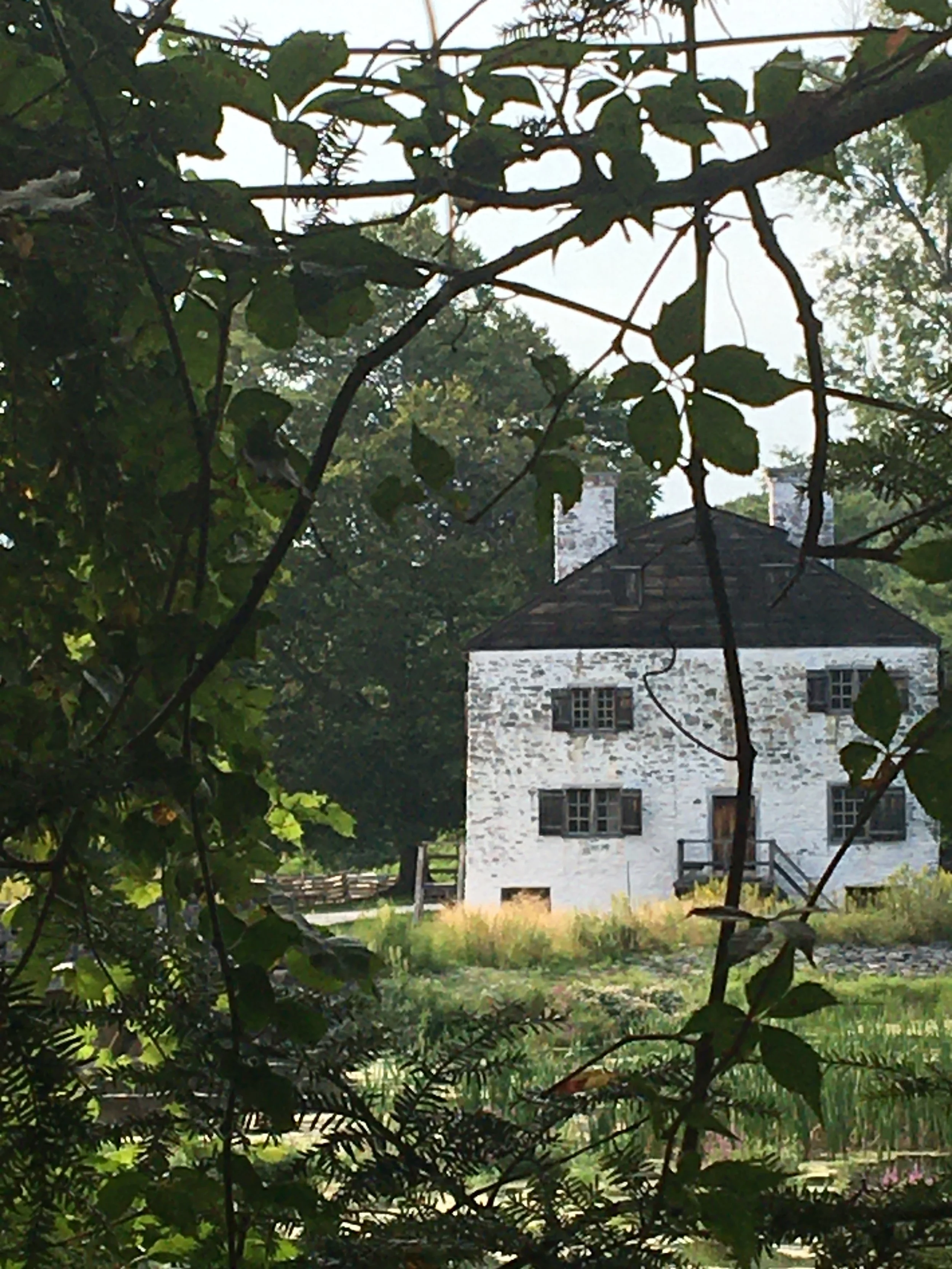
Philipsburg Manor, NY
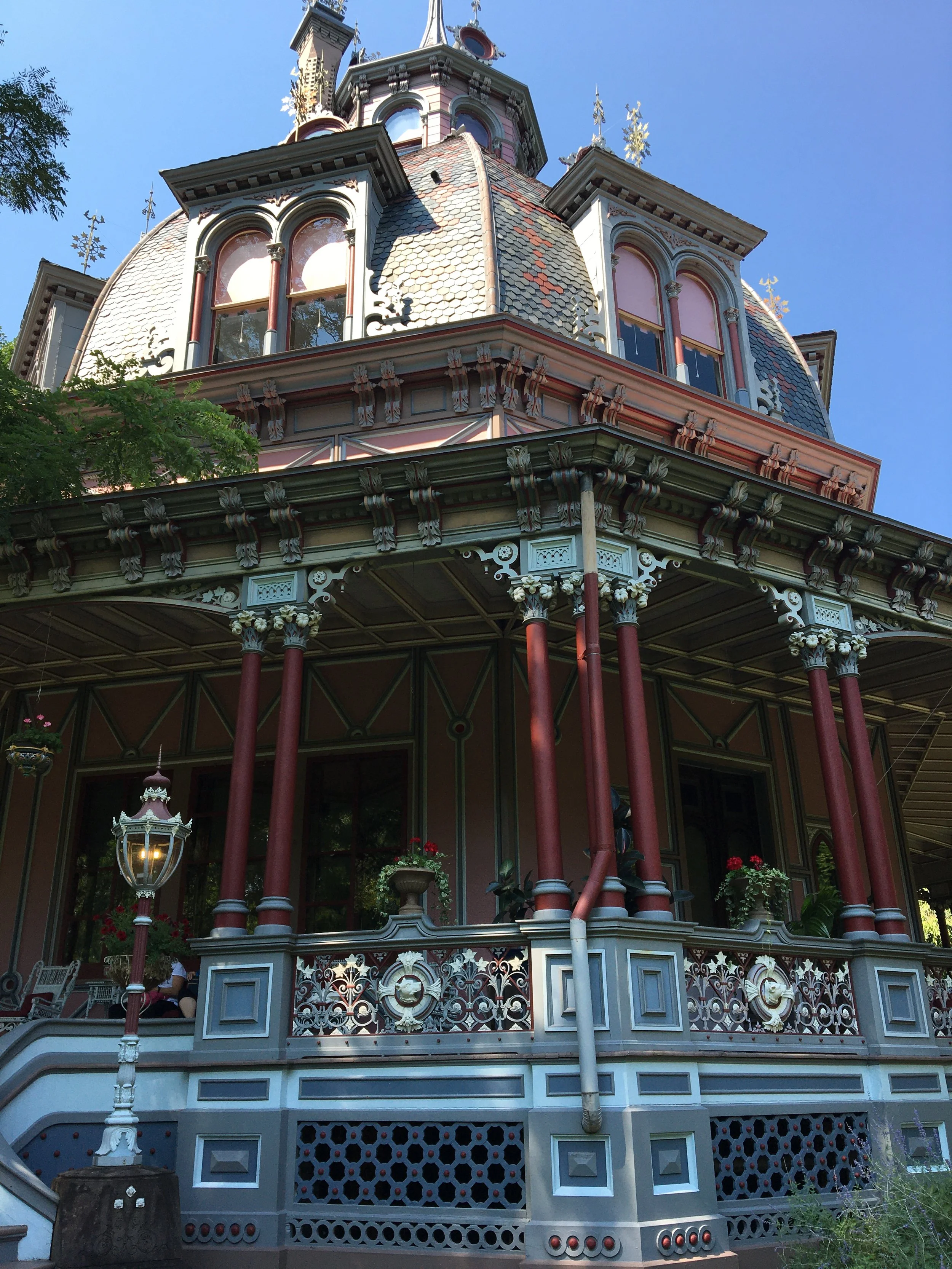
The Octagon House, NY
Was the Hessian real?
In The Legend of Sleepy Hollow, the story of the Headless Horseman tells the tale that a Hessian soldier was decapitated by a cannonball during a battle nearby Sleepy Hollow and that his ghost forever wanders in search of his head. But is it true? Apparently and perhaps surprisingly, yes - at least partially! General William Heath of the Continental army reported on October 28, 1776 that during the battle of White Plains, while in retreat the Patriots sent cannon fire, the ball striking a Hessian artillery, taking off the head of one of the Hessian artillery men and killing a horse in the process. Reportedly, the soldier is buried in a nameless grave somewhere in Sleepy Hollow cemetery, though this part of the story may not be true. It is hard if not impossible to put a name to the man that we now call the Headless Horseman. But he was not fiction, though his ghost might be.
The most likely inspiration for the classic Headless Horseman is the Dullahan, an Irish folktale (though its Irish origin is somewhat debated) of a headless rider who chases its victims from horseback or from a coach seat in the dark of night. But this is not the only cursed rider found in folklore. In fact, a great deal of countries have a story about a cursed rider. The Wild Hunt, a gang of horsemen and hounds who signal the coming doom of any who see the spectral party appears in German, Scandinavian, and Celtic folklore. El Muerto is a tale from the mid 1800s which tells the story of a bandit who paid for his crimes by decapitation. He was allegedly tied to his horse and set to wander No Man’s Land as a warning to other would-be criminals. Apparently, there is also a headless Templar who prowls the streets of Prague between midnight and one AM (though again it is hard to determine how true some of these stories are). One other story of ghostly riders we know to be at least 2000 years old was first discussed in the book of Revelations in the New Testament. The story is of the four horsemen of the Apocalypse. These four riders are the physical manifestations of Death, War, Pestilence, and Famine and are part of the end of times as written in the Holy Bible.
It is clear that Washington Irving was not the first to create the idea of a cursed Headless Horseman or even a cursed Horseman. Regardless of however many other cursed riders there are throughout legend and history, Washington Irving is the man who gave true fame to the idea of a Headless Horseman and is the reason the ghostly specter still continues to fascinate and haunt readers today.
The Legend of Sleepy Hollow Book Review
The Legend of Sleepy Hollow is a classic tale full of cozy descriptions of the Hudson Valley, and what life was like in a rural community during the early 1800s. Ichabod Crane, the protagonist, is a school master, well liked and jolly, with just a little bit of self-righteousness. He lives in the town of Sleepy Hollow, being moved from house to house each week as room and board is used to supplement his meager pay, but when Ichabod begins to court the lovely and rich Katrina Van Tassel, he is found to be placed at odds with the town hero, Abraham Bones. The two continuously try to circumvent each other’s efforts in winning the heart of Katrina only succeeding in playing out Katrina’s favorite game. After a night of revelry at a wonderful party, Ichabod, on his journey home encounters the horrific specter of the Headless Horseman. From that night onward, he is never seen in Sleepy Hollow again.
Throughout the story Ichabod Crane is depicted as a jovial and well-liked man whose talents for singing and ability to flatter have endeared him to the families of his students. Though the story is not told from the perspective of Ichabod, we do get to hear a bit of Ichabod’s personal thoughts. The particular thoughts that we the readers get to explore are his desires for riches and wealth primarily obtained through the rich and beautiful Katrina Van Tassel. Today we may see and interpret Ichabod’s intentions and desires to marry a wealthy woman as selfish, greedy, and wrong, but if we look at the reasons he has for it, it is hard to paint him quite so black. Ichabod is a school teacher and although many families at the time could not pay very much for the salary of a school teacher, they could offer their home to stay in and their dinners to eat. This is how Ichabod Crane is paid for his work, with room and board, being rotated between families to survive. In the summer months when school is not in session, Ichabod is faced with having to pick up work doing other chores that might see a roof over his head and food in his belly. It’s not surprising that faced with a beautiful wealthy girl who for all intents and purposes seems to like him well enough that Ichabod might dream of a richer, stable future where he would not need to worry about who he was staying with the next week, and where he could eat as much as his insatiable appetite would allow, as well as have the fortune and ability to support a large family.
Despite what some adaptations of The Legend of Sleepy Hollow would have you believe, Ichabod Crane is somewhat of a brave character. Many adaptations like to lean into his cowardice and his fear of being chased in the dead of night by what he thinks is a demon Headless Horseman. In fact, in the book it is particularly stated the Ichabod is a very religious man and holds great fear for anything supernatural. He fights this fear by singing hymns, something the townsfolk of Sleepy Hollow take great joy in, considering they really are pleased by hearing his singing. In the faces of non-supernatural fear though Ichabod doesn’t seem to blanch. When Brom Bones clearly sets out with intentions towards Katrina, all the other men fall away knowing that Brom would be an adversary they would not wish to face, however Ichabod continues his pursuit of Katrina despite the other men’s fear. Even though he was told a ghost story which frightened him terribly at the party, Ichabod still rides home alone, singing hymns as he goes.
One of the biggest aspects of Sleepy Hollow is the prolific descriptions of delicious food. Washington Irving did not hold back when diving into Ichabod’s immense love of food. This is specifically done at the party that Ichabod Crane attends toward the end of the book. Tables are described as jam packed with delicious foods popular at the time of the story's writing.
“Such heaped up platters of cakes of various and almost indescribable kinds, known only to experienced Dutch housewives! There was the doughty doughnut, the tender oly koek, and the crisp and crumbling cruller; sweet cakes and short cakes, ginger cakes and honey cakes, and the whole family of cakes. And then there were apple pies, and peach pies, and pumpkin pies; besides slices of ham and smoked beef; and moreover delectable dishes of preserved plums, and peaches, and pears, and quinces; not to mention broiled shad and roasted chickens; together with bowls of milk and cream, all mingled higgledy-piggledy, pretty much as I have enumerated them, with the motherly teapot sending up its clouds of vapor from the midst”
Food is so important in The Legend of Sleepy Hollow that I have decided to share a handful of videos pertaining to recipes that you might be able to try easily at home to help yourself get into the autumn spirit and to better help yourself become acquainted with historic cooking.
Townsend shows you how to make a decadent apple pie, the likes of which a wealthy family would make.
https://www.youtube.com/watch?v=a4gFHlRE3KM
Townsend shows you how to make a simple pumpkin pie.
https://www.youtube.com/watch?v=fLbfpGYf89Y
Townsend show you how to make historic pound cakes

All things considered with this story, I would set the rating of The Legend of Sleepy Hollow at PG. It is a classic cozy tale presented perfectly by the 1949 Disney animated short. This is a perfectly safe story to read to a whole family during Halloween and with the exception of it being a little long for one sitting, and with the language perhaps being a little hard for younger audiences to understand, it is a perfect Halloween story.
(A link to a copy of the book for you to enjoy for free!)
https://www.gutenberg.org/files/41/41-h/41-h.htm book
Citations
American Battlefield Trust: White Plains. https://www.battlefields.org/learn/revolutionary-war/battles/white-plains
Village of Sleepy Hollow New York
https://www.sleepyhollowny.gov/289/History-of-the-Village
Sleepy Hollow - Tarrytown Chamber of Commerce https://sleepyhollowtarrytownchamber.com/about-the-area/