The Halloween Tree
Book
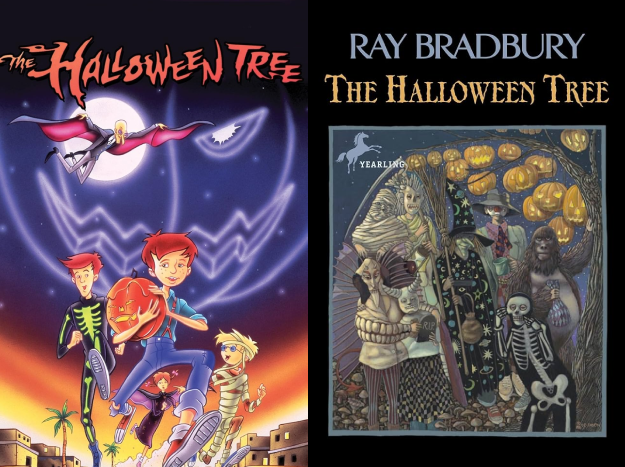
The Halloween Tree by Ray Bradbury is a Halloween staple that many have forgotten about in today’s world of slashers and terrifying paranormal thrillers. Originally published in 1972, this story follows a group of children as they desperately attempt to track down the wandering soul of their dying friend, Pipkin. With the help of a mysterious elderly neighbor whose magical pumpkin tree has been pilfered by Pipkin's wandering soul, the eclectic band travel through time to witness where the traditions of Halloween originally came from, and to learn that life, in all its facets, is precious and that death is inevitable. The story deals with a very heavy topic - that death is guaranteed and that it is important that one lives their life well because you never know how long yours will be.
Movie
The Halloween Tree movie is a wonderful adaptation though it cut out a number of the characters in order to reduce the runtime of the film and downplay some of the emotional punch at the end. It is a remarkably good adaptation of the book and is a wonderful Halloween staple to watch with the whole family. Narrated by the late Ray Bradbury, The Halloween Tree has a particularly educational side to it as it depicts events that took place throughout history that we now incorporate into the traditions of Halloween. This includes how the Egyptian’s mummified their dead, the terrifying gargoyles on Catholic cathedrals and Día de los Muertos or the day of the dead, demonstrating how Mexico honors their ancestors through celebration. This movie also confronts the reality of death and how each culture deals with the passing of family members and friends and teaches children that life is precious, but so is death.
Rating
The movie and book of The Halloween Tree will be receiving a G rating. This is a wonderful story to read to your children during the season of Halloween, especially if they find themselves afraid of certain aspects of the holiday. It is a way to demonstrate to them that most of the things that we interpret for Halloween come from real life practices that are not as scary as we think, and that life is a precious thing given to us that must be cherished and that death is a part of life also to be respected.

Treat
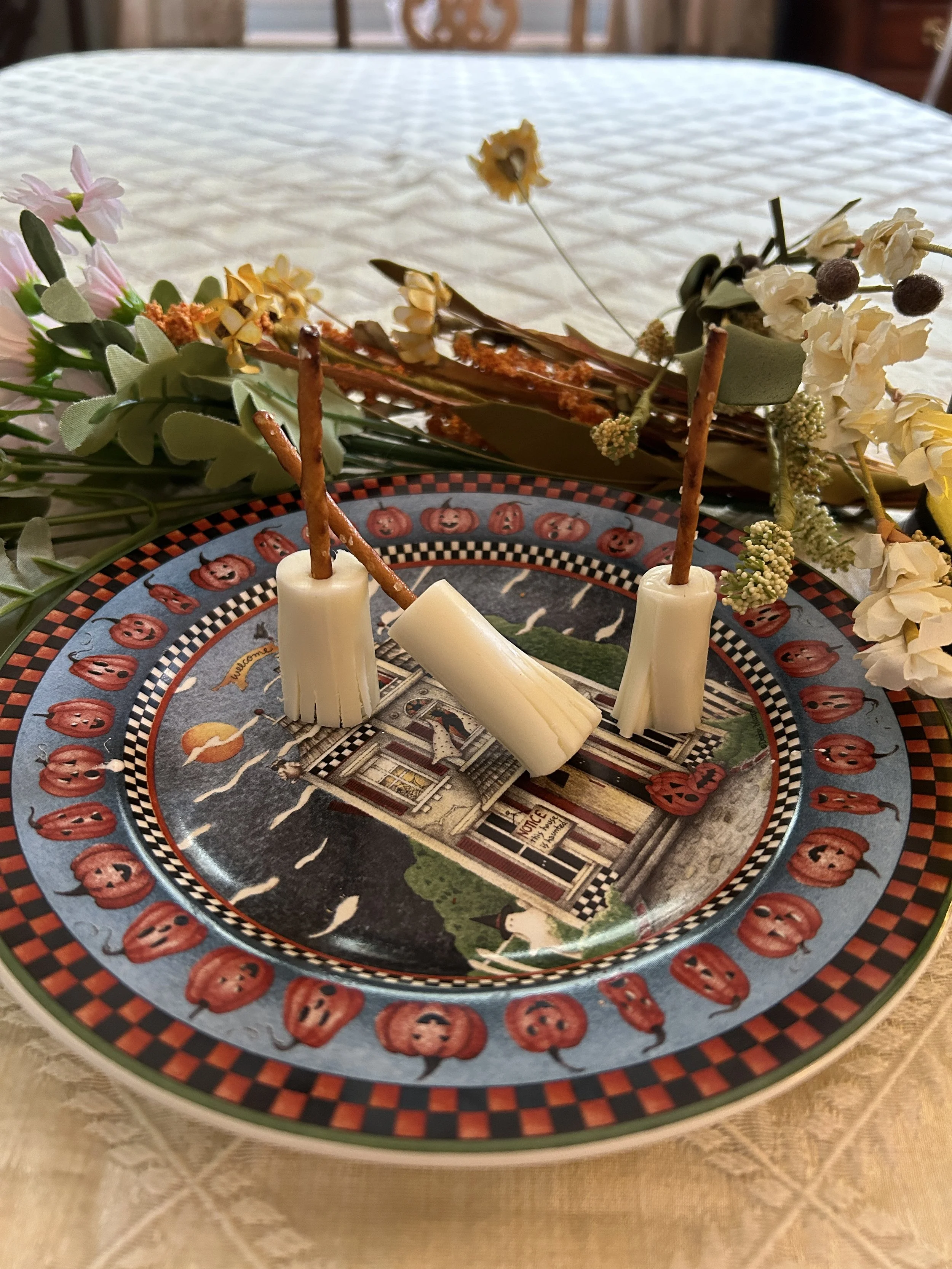
The treat for this movie is very easy and a wonderful way to introduce young chefs to safety needed in the kitchen. Create these wonderfully satisfying little treats that will sweep you right off your feet!
Witch Brooms
Ingredients
- Pretzel sticks
- String cheese of your choosing
- A thin sharp knife
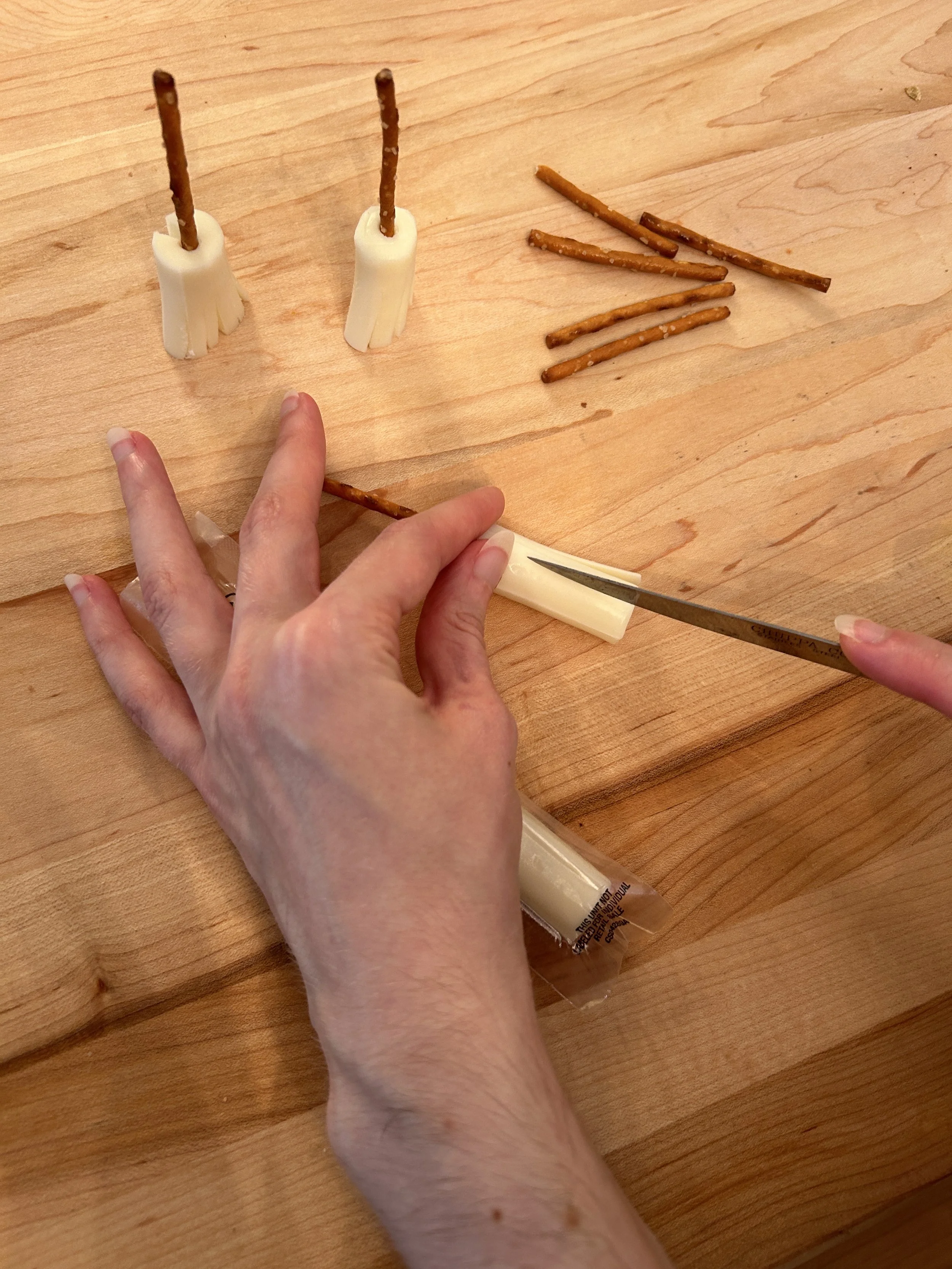
1) Cut the string cheese into three equal size portions
2) Stick a pretzel partially through one end of the string cheese. The pretzel does not have to go very deep in order to stay in. And if you push it too deep, it will hinder the knife stability to cut the string cheese.
3) Next, being very careful with your fingers, cut a little more than half way up the string cheese stick. Cut multiple rows up the string cheese in order to achieve the separated texture of a broom.
Enjoy the movie!
The Legend of Sleepy Hollow
Book
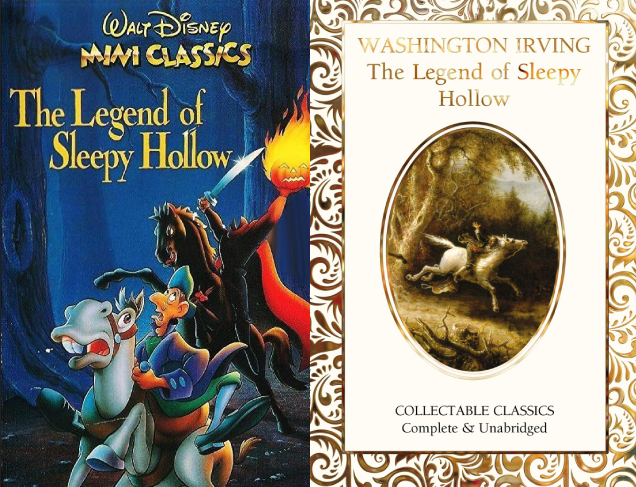
Sleepy Hollow is considered America’s first ghost story. The story follows the schoolmaster, Ichabod Crane, as he prepares to attend a party thrown by the family of the woman he would like nothing more than to marry (if for no other reason than her father’s wealth). On his fateful trip home from the evening of merriment, he encounters the terrifying specter of the legendary Headless Horseman! This is a classic short story and takes no time at all to read. It is delightfully spooky and makes your taste buds water as Ichabod (a true foodie) describes every delicious morsel at the Van Tassell banquet. If you would like to read more about the origins of The Legend of Sleepy Hollow and its writer, Washington Irving, check out our article about Sleepy Hollow, New York!
Movie
The adaptation we will be choosing for this particular story is the classic 1949 The Legend of Sleepy Hollow produced by Walt Disney. There are many other versions of Sleepy Hollow that may be more entertaining for an older audience or those fond of terror, such as Tim Burton’s Sleepy Hollow. However, this classic animated short resembles the story put down by Washington Irving far more closely. It manages to maintain the spooky ending to the story as well as simultaneously bringing to life the more cheerful and jubilant aspects of the tale that many adaptations ignore. Other versions that might be as appealing to watch without venturing into the horror adaptations of the story would be Hallmark’s The Legend of Sleepy Hollow (1999) and the Rabbit Ears version, The Legend of Sleepy Hollow (1988).
Rating
This story receives a G rating for the short story and the animated movie. It is a whimsical tale with a little bit of spookiness for fun. Unless viewers venture into some of the darker interpretations of the story depicted in TV shows and movies, there is no reason to be afraid of sharing this spooky story with younger audiences.
Treat
Pumpkin Head Brownie Bites
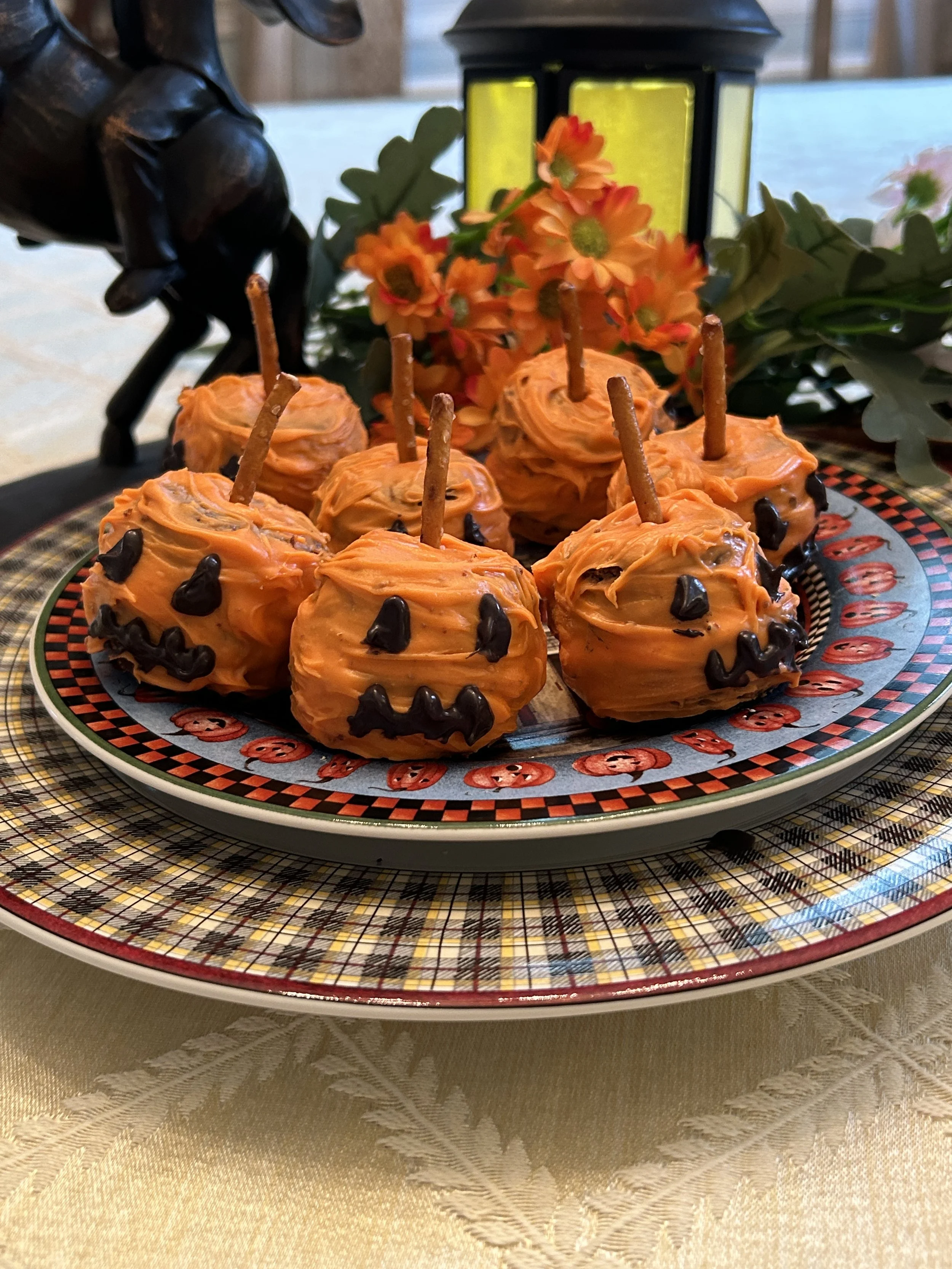
Ingredients
- Small or medium Pretzel sticks
- Brownie bites
- Orange melting candy morsels
- Black or brown melting chocolates
- Marshmallow fluff
- A bowl
- Butter knife or fingers
- Parchment paper
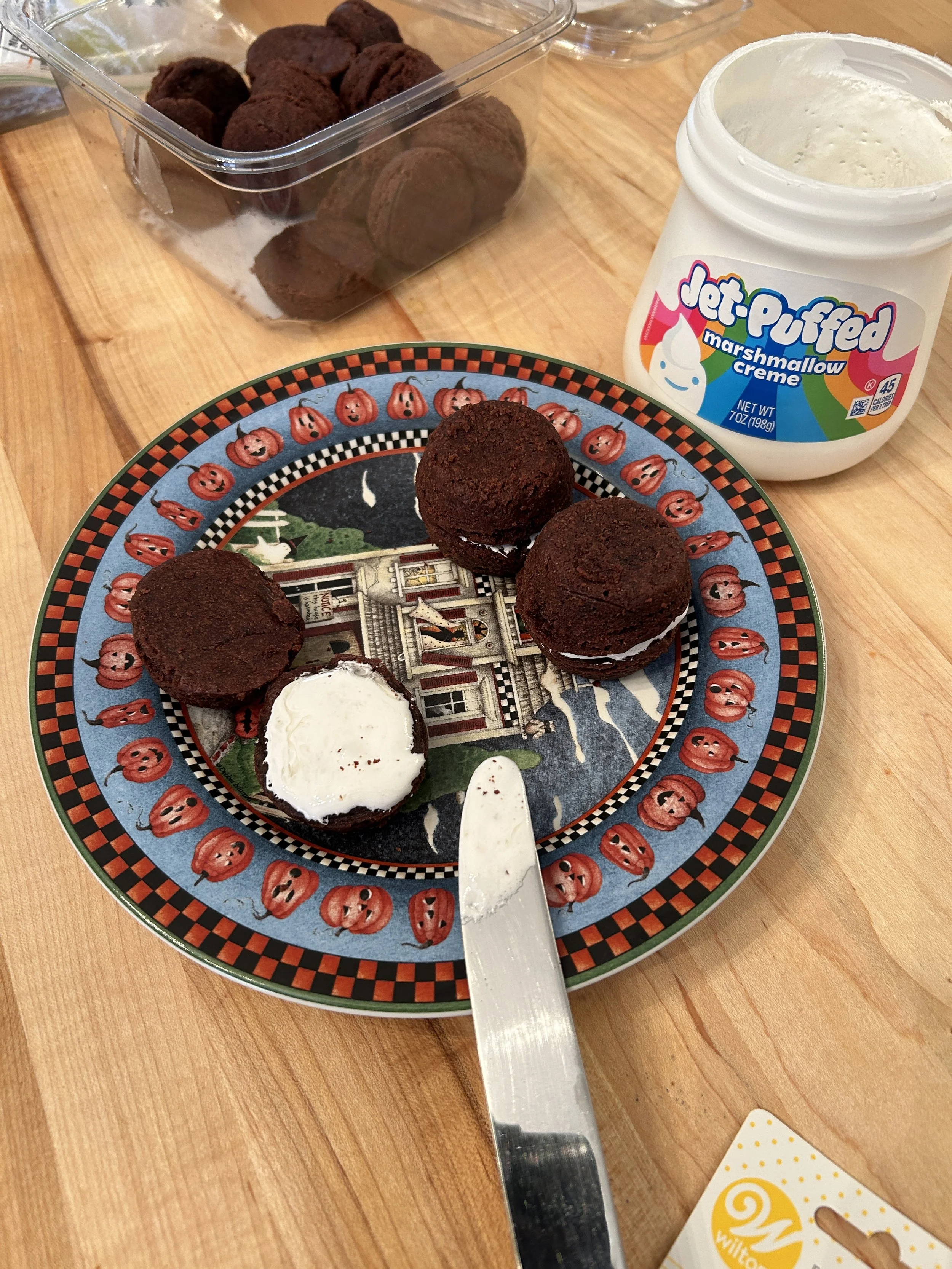
1) Begin by placing a sheet of parchment paper on a plate
2) Take two brownie bites. On one brownie spread a little marshmallow fluff and sandwich between the top of the other brownie. This will give a nice pumpkin shape.
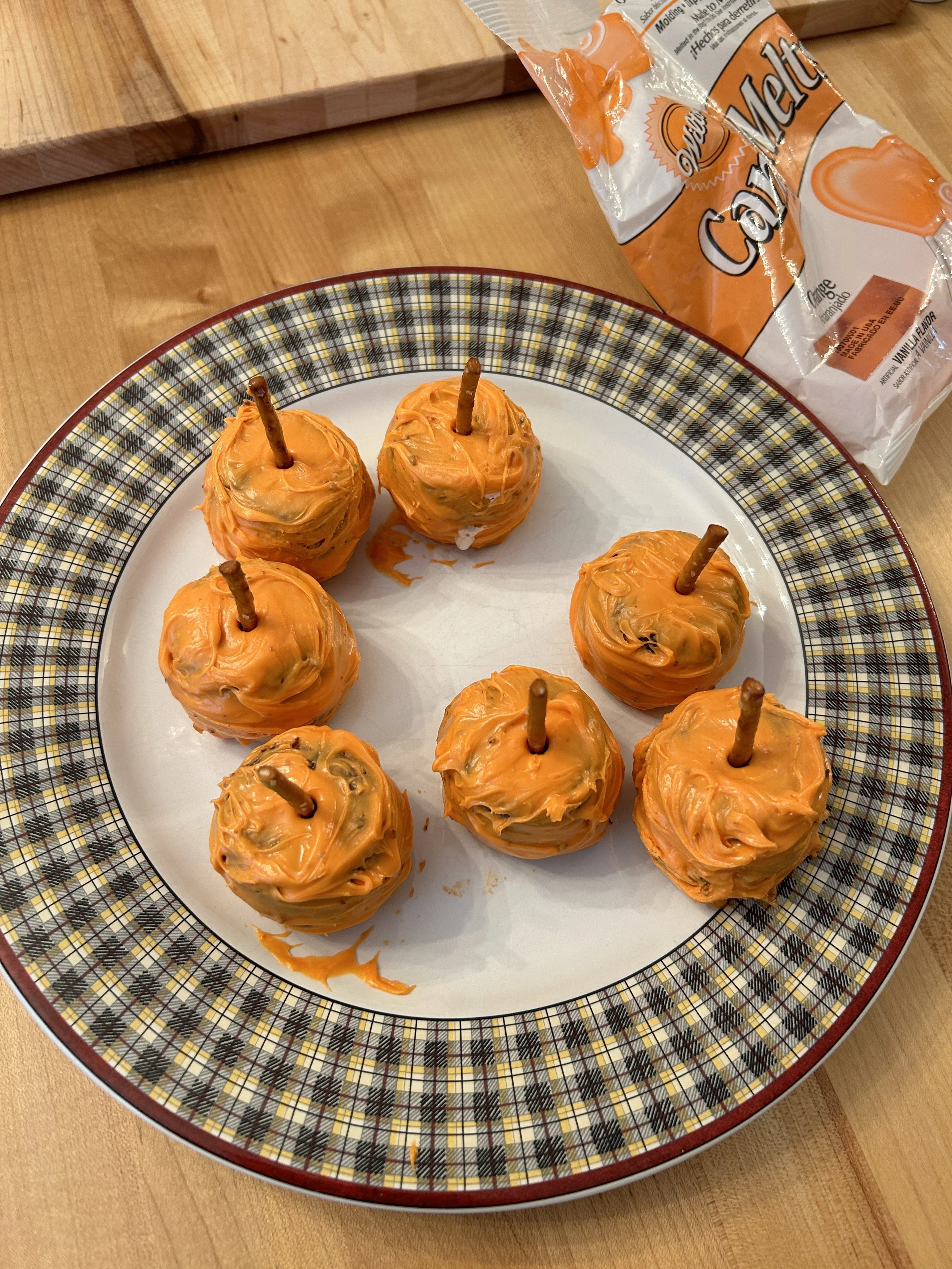
3) Place the orange melting candy morsels into a bowl. Make sure the morsels are placed in a microwave safe container and microwave for an interval of 20 seconds before removing the bowl from the microwave and stir the morsels. Repeat this process of microwaving for 20 seconds and stirring until the morsels are a nice liquid consistency. It is possible to burn the morsels in the microwave so do be careful. Some colors of morsels do not melt as easily regardless of how many times you microwave them. If you continue to microwave them beyond the melting point they will simply dry out and become harder to manage. Three to four bouts of microwaving should be enough for orange morsels. Morsels can also be hot so ensure that your little ones are careful. If the morsels become runny and drip off the spoon, it will be possible to roll the brownie bites in the liquid in order to cover them. If the morsels have melted to more of an icing consistency it might be more advantageous to apply it with fingers or a spoon, keeping in mind to let it cool just enough to not burn or hurt to handle.
4) Place the now morsel coated brownie on the plate. While the outside is still soft, push a pretzel through the top to create the pumpkin stem. Leave to completely dry. (if you wish to speed up the drying process, place the wire rack in the refrigerator until the outer shell is hard)
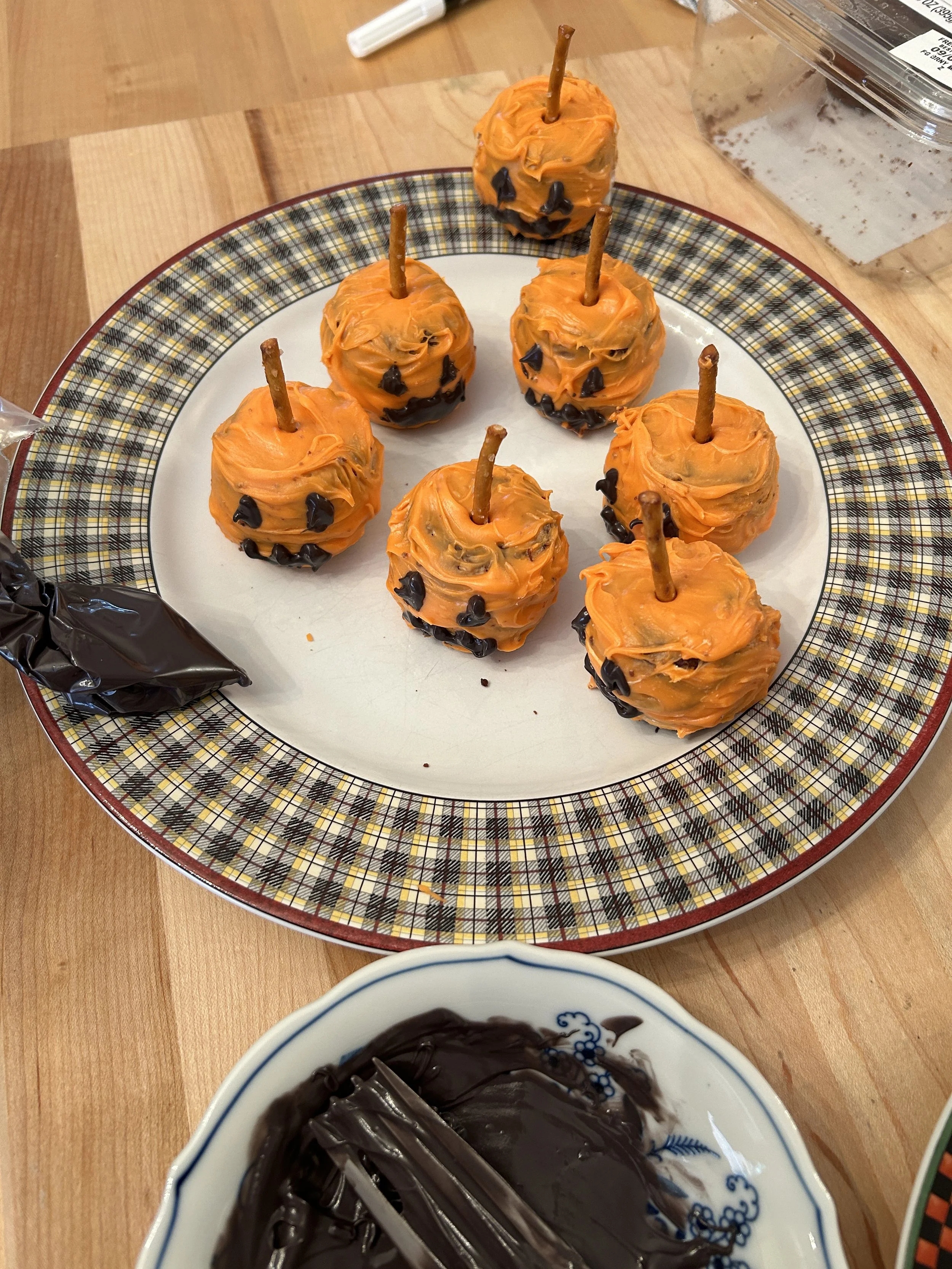
5) With the edible gel, dark icing, or melted chocolate, draw on a spooky pumpkin face! (Note that edible markers do not draw well on the candy coating).
Enjoy the movie!
Jurassic Park
Book
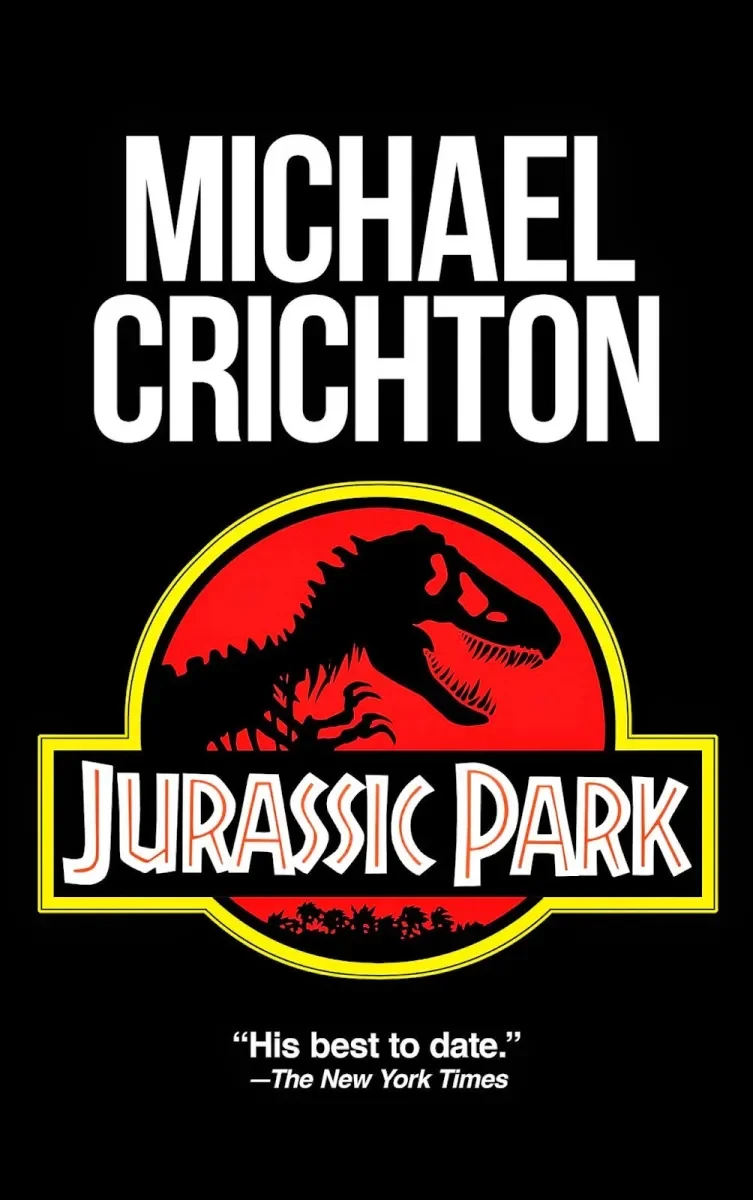
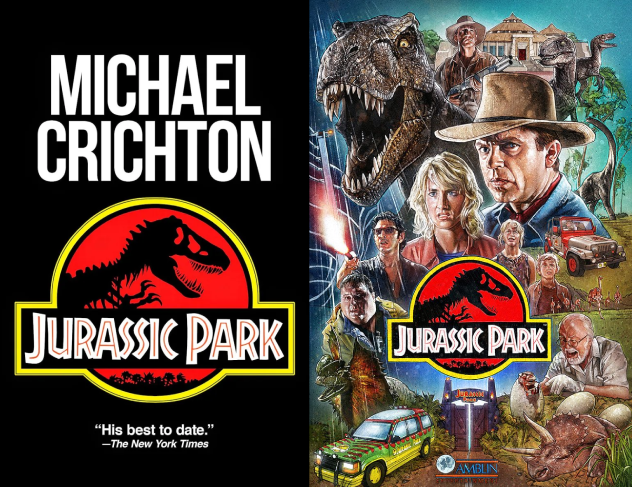
There is very little doubt in my mind that as soon as you read this title, the beautiful score of the 1993 Jurassic Park began to play in your mind. The movie was an instant classic and is still seeing remakes to this day, but very few people know that it was a novel before it became a movie. Published in 1990 the book saw massive success and the rights to the movie were quickly acquired by Universal Studios, where Steven Spielberg immediately began work adapting the terrifying story to the big screen. The novel of Jurassic Park, though similar in many ways, is also very different from its movie. Hammond is not the sweet lovable grandfather that we all know and adore. He is instead a greedy manipulator of reality who does not seem to care who gets hurt or even dies in his attempt to bring dinosaurs to life simply for the profit. Alan Grant does not hate children and in fact absolutely adores them and finds their sense of fascination particularly with the world of dinosaurs to be endearing and one of the reasons he loves his job so much. There are a number of dinosaur attacks from the novel that are skipped in the movie, as well as a surprising amount of death rearranging and character personality trait reversal. But when all is told, the same moral is left at the end of the story. Life should never be manipulated by mankind.
The book is full of terror as the smarter than anticipated dinosaurs begin to hunt down the humans trapped on the island with no means of escape. The characters face a variety of terrifying animals and situations when the park electronics go haywire due to the work of a greedy employee who wishes to sell the dinosaur DNA to the highest bidder.
The party is all split up into smaller groups as they initially try to find their footing back to one another, each encountering terrifying dinosaurs along their way - to include Velociraptors, Tyrannosaurus Rexes, Pterodactyls and a myriad of other brutal and gentle giants.
Movie
As previously stated, this movie is widely considered a cinematic classic. During the height of Steven Spielberg’s success, Jurassic Park made $47.02 million in domestic ticket sales alone during its opening weekend. It is known for being a thrilling adventure across an island full of deadly dinosaurs. Shockingly, the movie is less scary than the book, cutting out multiple instances of violent and terrifying encounters that the characters face, and some aspects of characters that made the events surrounding their death more brutal or tragic. The blood is vaguely shown and dismembered body parts are hinted at, this level of cinematic fear does not come close to the terror found within the book. The movie is not only known for its score but its creative use of both practical and CGI effects that bring the dinosaurs to life in a time where computer generated creatures did not look all that convincing. This movie and its book bring up a wonderful opportunity to discuss what it means when we manipulate nature to be as we wish it to be, especially when that is done for a profit.
Rating
The movie has a rating of PG-13 and is perfectly acceptable for most teenagers to watch given how the story was made into more of a dark adventure than the horror of the original novel. However, the novel I will give a rating of R, as it not only has much more intense suspense, it also has much more graphic depictions of gore and violence. Michael Crichton, the author of Jurassic Park, was a medical professional at the time of writing this particular book. This enabled him to write about graphic and specific medical information that lends the story a very real and visceral feeling. It is advisable that individuals who read this book are OK with and understand that it contains graphic depictions of death and maiming that may be very disturbing to some audiences.


Treat
This treat is fun and delicious for a wonderful movie night snack.
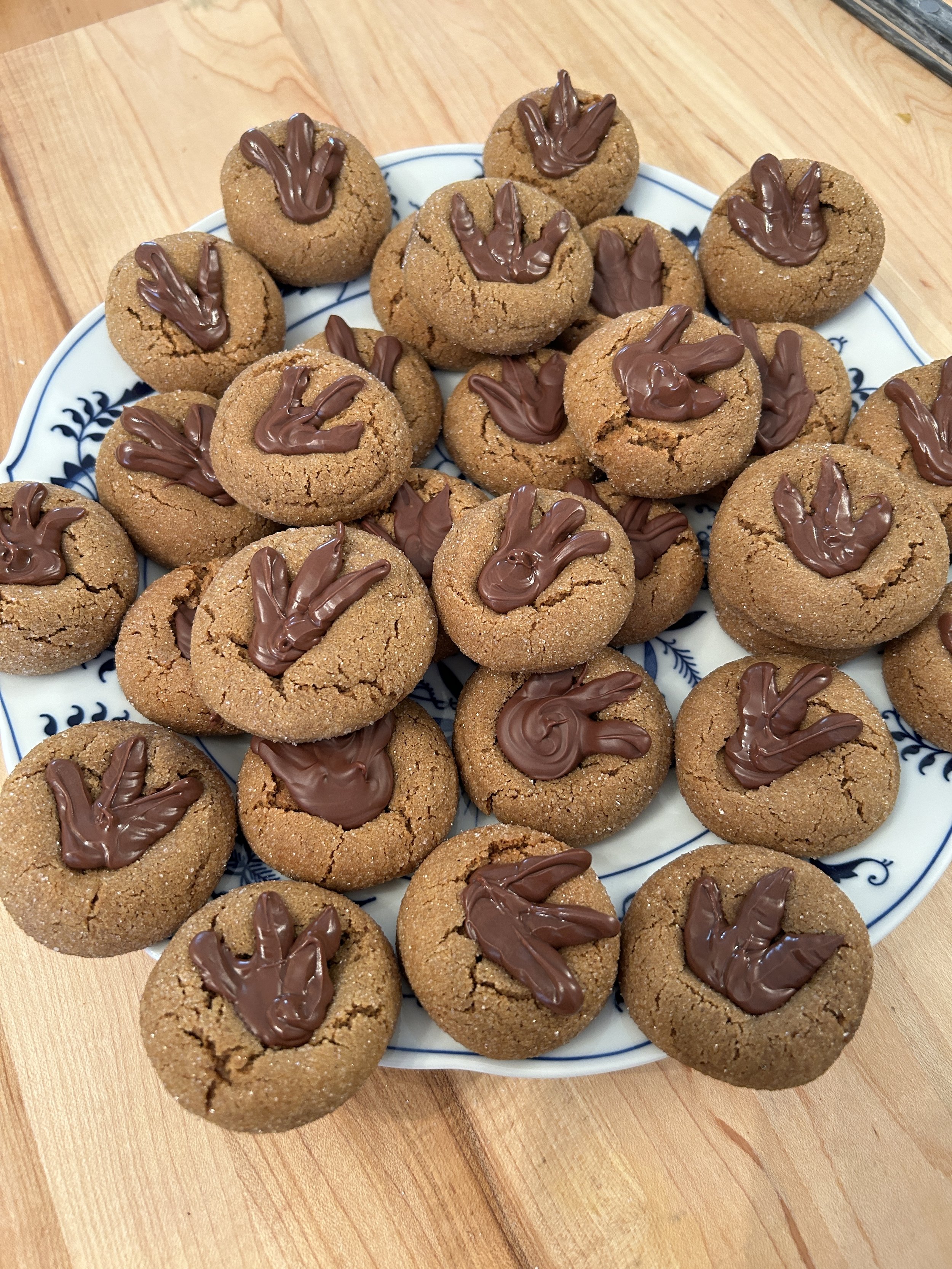
Molasses Dinosaur Footprint Cookies
Ingredients
2 cups all-purpose flour
1 teaspoon baking soda
1 teaspoon cinnamon
1 teaspoon ground ginger
½ teaspoon salt
¼ teaspoon ground nutmeg
¼ teaspoon ground cloves
½ cup no salt butter (softened to room temp)
½ cups brown sugar
1/3 cup molasses
1 large egg
1 teaspoon vanilla extract
A small amount of white sugar (to roll cookies in)
Chocolate chips
Piping bag
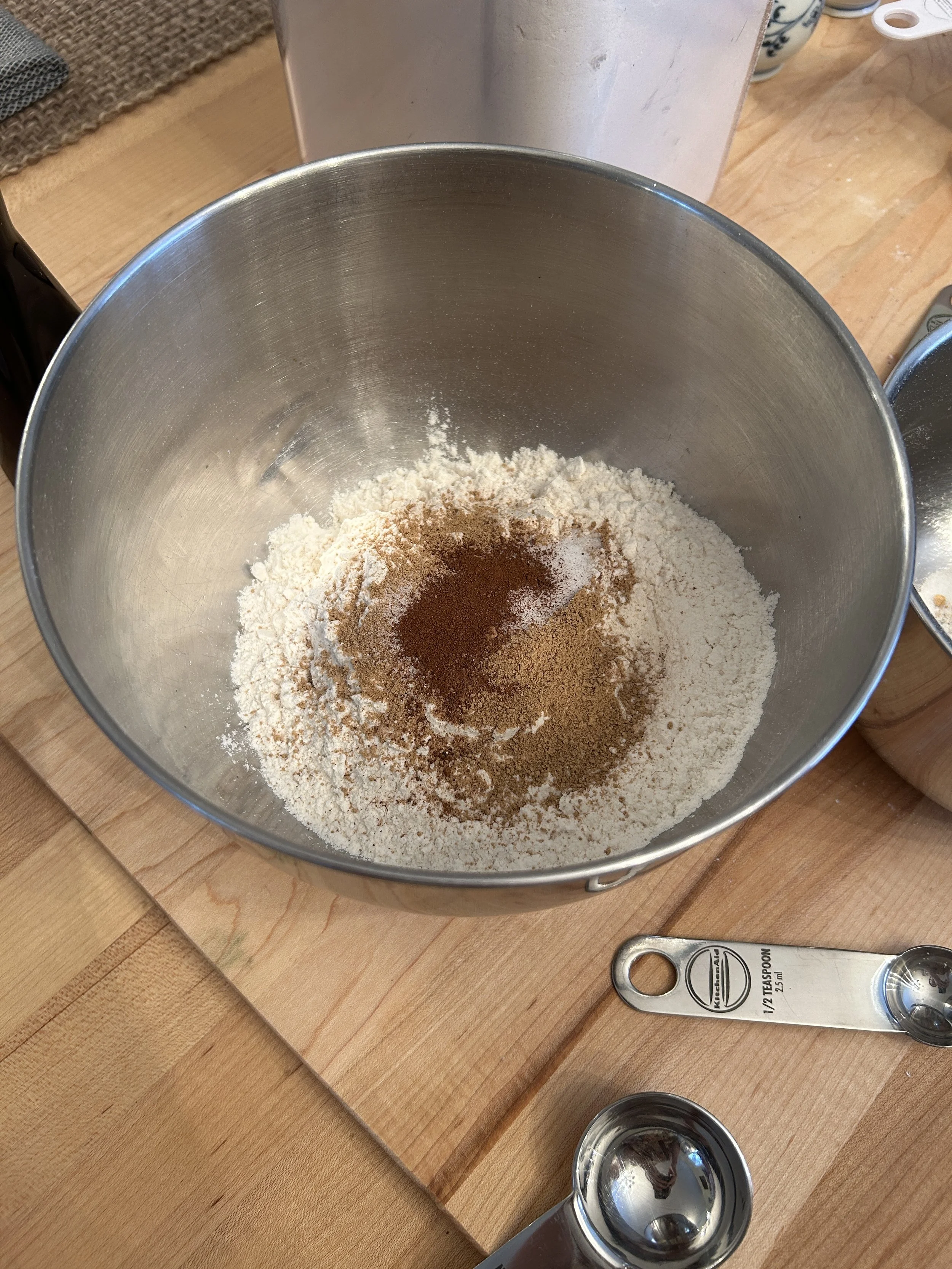
1) Combine 2 cups flower, 1 teaspoon baking soda, 1 teaspoon cinnamon, 1 teaspoon ginger, ½ teaspoon salt, ¼ teaspoon nutmeg, and ¼ teaspoon cloves. mix and set aside.
2) In a mixing bowl cream together the stick of butter (if the butter is not room temp it will not cream. If the butter is still to cold place in the microwave for no more then 5-10 second intervals till it is soft but not runny) and the ½ cup brown sugar until the mix is fluffy. Add the one egg and 1 teaspoon vanilla (do not mix to much, only till combined well. Eggs can be “killed” if mixed to much.
3) With the mixer tuning on the lowest setting slowly add the flour mix till completely combined.
4) Cover the top of the bowl and chill in the refrigerator for 2 hours or until firm.
5) Preheat oven to 350 degrees f.
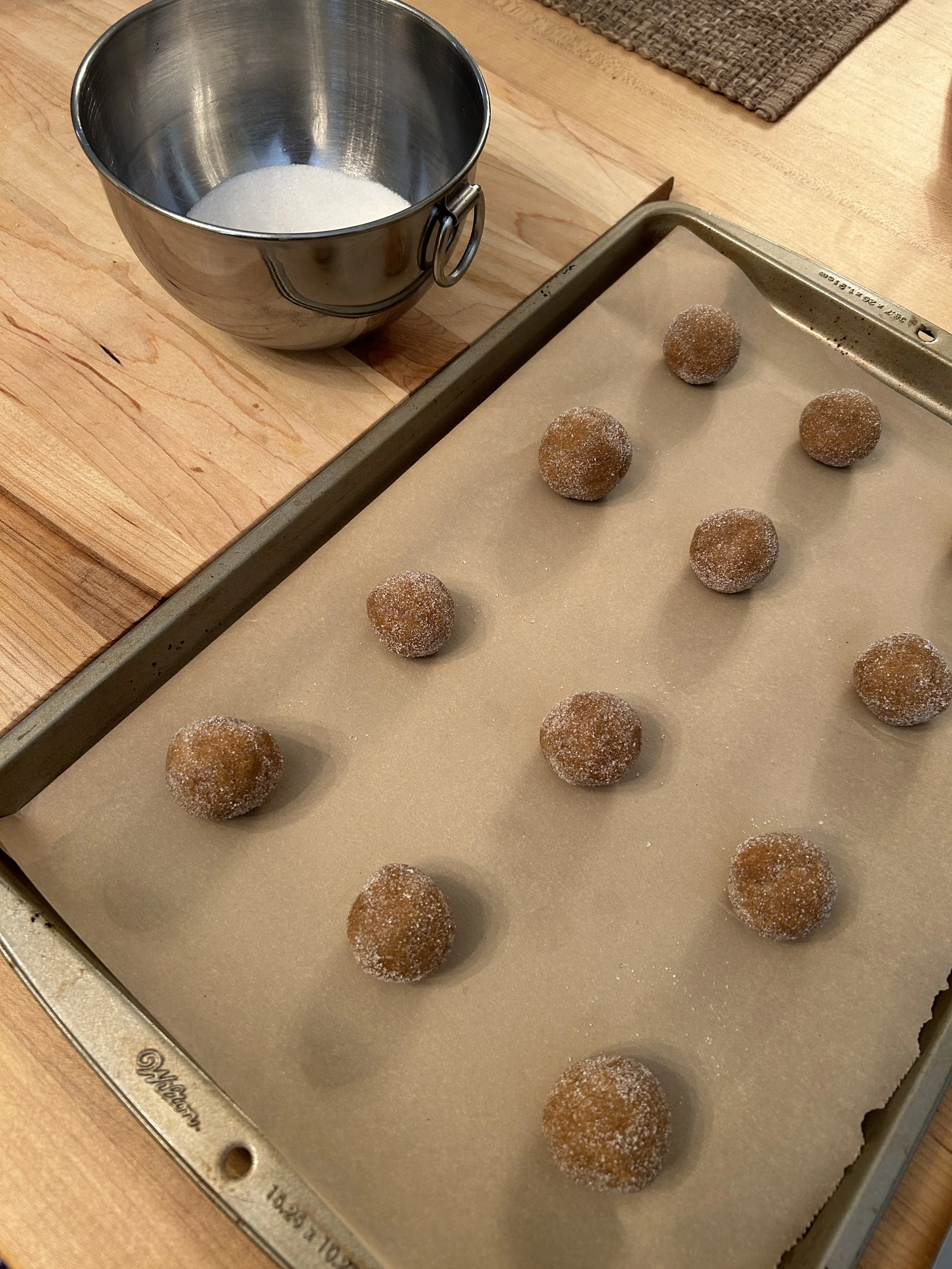
6) Cover a cookie sheet with parchment paper. Roll out balls of dough into half a tablespoon each, roll in granulated sugar and place on cookie sheet about two inches apart.
7) Bake the cookies for 10 - 12 minutes. Be careful not to bake to long as they will dry out and become hard.
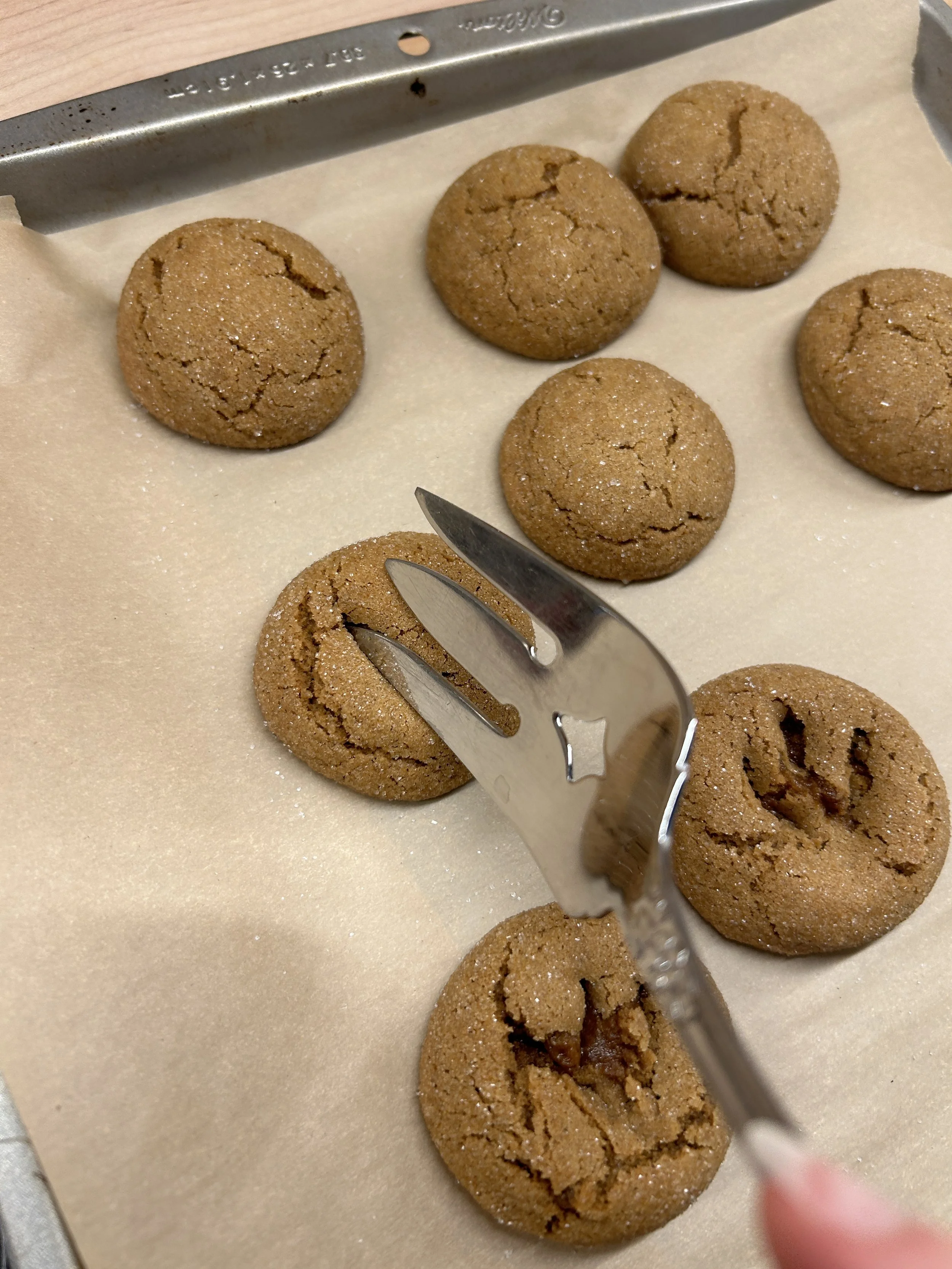
8) Once the cookies are out start to put the print in. This can be done in many ways. The foot of a toy dino is perfect, the shape may also be accomplished by using a fork. The cookies do cool down fast, so work quietly to press the “thumbprint” in. If nothing is to hand the back of a spoon will also work just fine.
9) Let the cookies cool completely off the cooking sheet before filling the prints with melted chocolate chips. If the claws are not there and it is only a dip you can still pip the claws onto the cookie. I did it both ways as the cookie was cooling to quickly for me to keep making the fork marks.
10) let the chocolate cool (if you want it to dry faster place in the refrigerator for 10 min.
Enjoy the movie
Peter Pan
Book
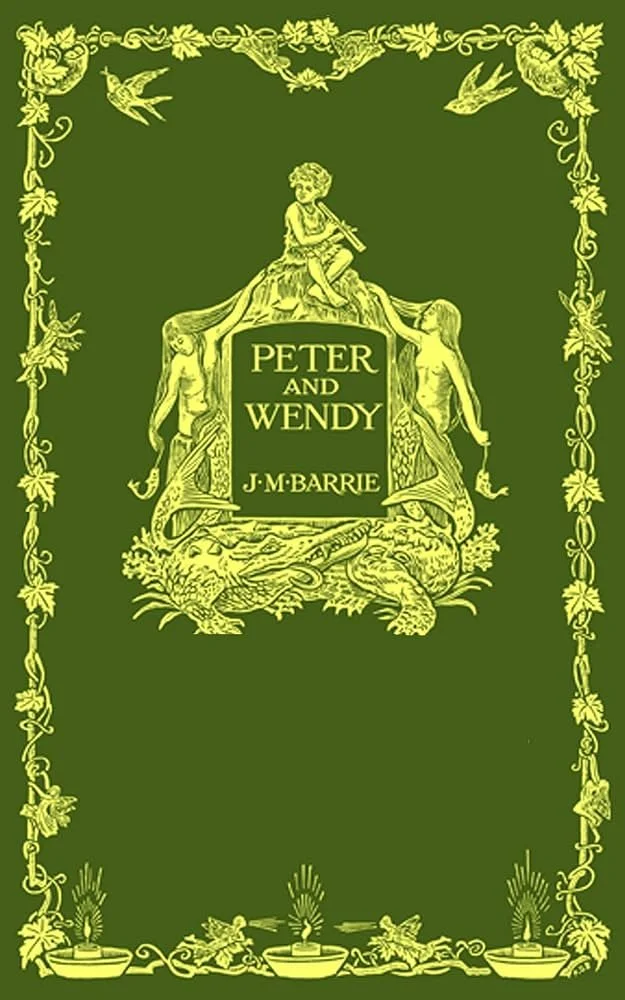
Peter Pan (originally titled Peter and Wendy) by J. M. Barrie was originally published in 1911 and was the successor to the much acclaimed play Peter Pan, the Boy Who Wouldn’t Grow Up from 1904, also by J. M. Barrie. Since its publication, it has never been out of print and has been adapted hundreds of times throughout different forms of media to include plays, TV shows, movies, board games, spinoff books, theme park attractions, and a peanut butter brand.
Before Peter Pan was introduced in his own novel in 1911, he first appeared in the 1902 story called the Little White Bird in a section of the book called Peter Pan in Kensington Gardens. Audiences loved the character of Peter Pan so much that it inspired Barrie to write the play as well as for publishers to publish the chapter of Peter Pan in Kensington Garden on its own as a short story. Most individuals though will be familiar with the original novel or at least aspects of it.
Peter Pan follows a girl named Wendy Darling, who is on the cusp of growing up much to her dismay. One night a little boy flies into the nursery room in search of his shadow. When Wendy presents the shadow to him and helps him sew it back on, he repays her and her brothers by teaching them to fly and taking them to the far-off island of Neverland. It is here, surrounded by a vast tropical wilderness, mermaids, fairies, pirates and lost boys, that Wendy realizes that it might not be so terrible to grow up after all, especially when confronted with the obstinance of the ever-youthful Peter Pan who is the embodiment of unadulterated childhood, complete with all of its ups and downs.
Movie
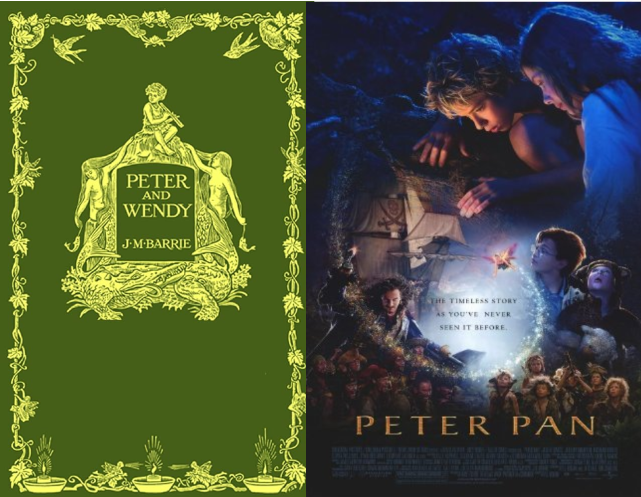
As stated previously, there are many adaptations of Peter Pan, however, the one that we will be recommending today is the 2003 adaptation of Peter Pan by Universal Pictures. This adaptation is mostly faithful to the plot of the book, specifically when it comes to the theme of growing up. This particular adaptation leans wonderfully into the sincerity of the story rather than focusing solely on the whimsical adventures that Peter Pan and the Lost Boys get up to whilst Wendy and her brothers are on the island. Not only is the storytelling particularly well done, the acting and set design create a particularly rich environment for the story. It is a perfect cozy movie to watch with the family, full of both adventure and heartfelt sincerity when it comes to the characters and situations that they find themselves in. Other adaptations that might be suitable depending on the age of the audience would be Disney’s 1953 Peter Pan or the 1954 musical stage adaptation of Peter Pan, starring Mary Martin.
Rating
Surprisingly enough Peter Pan is a shockingly dark novel in comparison to its most popular 1953 Disney film adaptation or the 2003 adaptation. Throughout the story, Peter is shown to be callously violent particularly when it comes to the pirates which he fights merely for fun. Peter is depicted as having a very short memory, forgetting his enemies almost as quickly as he kills them, treating the entire act of battle more as a whimsical pastime than any serious danger. He has completely forgotten that he is the one responsible for cutting off Captain Hook's hand and feeding it to the crocodile, who now endlessly pursues Captain Hook, hoping to devour the rest of him. It is also stated after Peter has killed Hook that he almost instantly forgets that he ever existed at all. This is contrasted with Captain Hook's almost single-minded hatred for Peter. There was also a line that indicates that Peter kills his own Lost Boys when they begin to grow up, as it is stated he is the only one who has actually stopped growing up and is forever a child. Although this is never actually seen to happen in the book, it is indicated that Peter “thins them out” as they get too old.
Peter is also grievously wounded during a confrontation with Captain Hook at the mermaid lagoon where he is gouged by Hook,s… well… hook, and believes he will drown on the rock because he does not have the strength to fly away.
With these aspects in mind, I would rate the book of Peter Pan somewhere between PG and PG-13. Many children will most likely not be old enough to understand some of the implications of the story as they read, however, older children are more likely to understand the dark implications that the story presents to them. The movie will be receiving a PG rating as this is the rating originally given it. Also, it should be noted that this movie removes some of the darker more callous aspects of Peter's character, instead adopting a more traditional fun-loving Peter that many today are familiar with.

Movie Night Treat
Deviled Ships
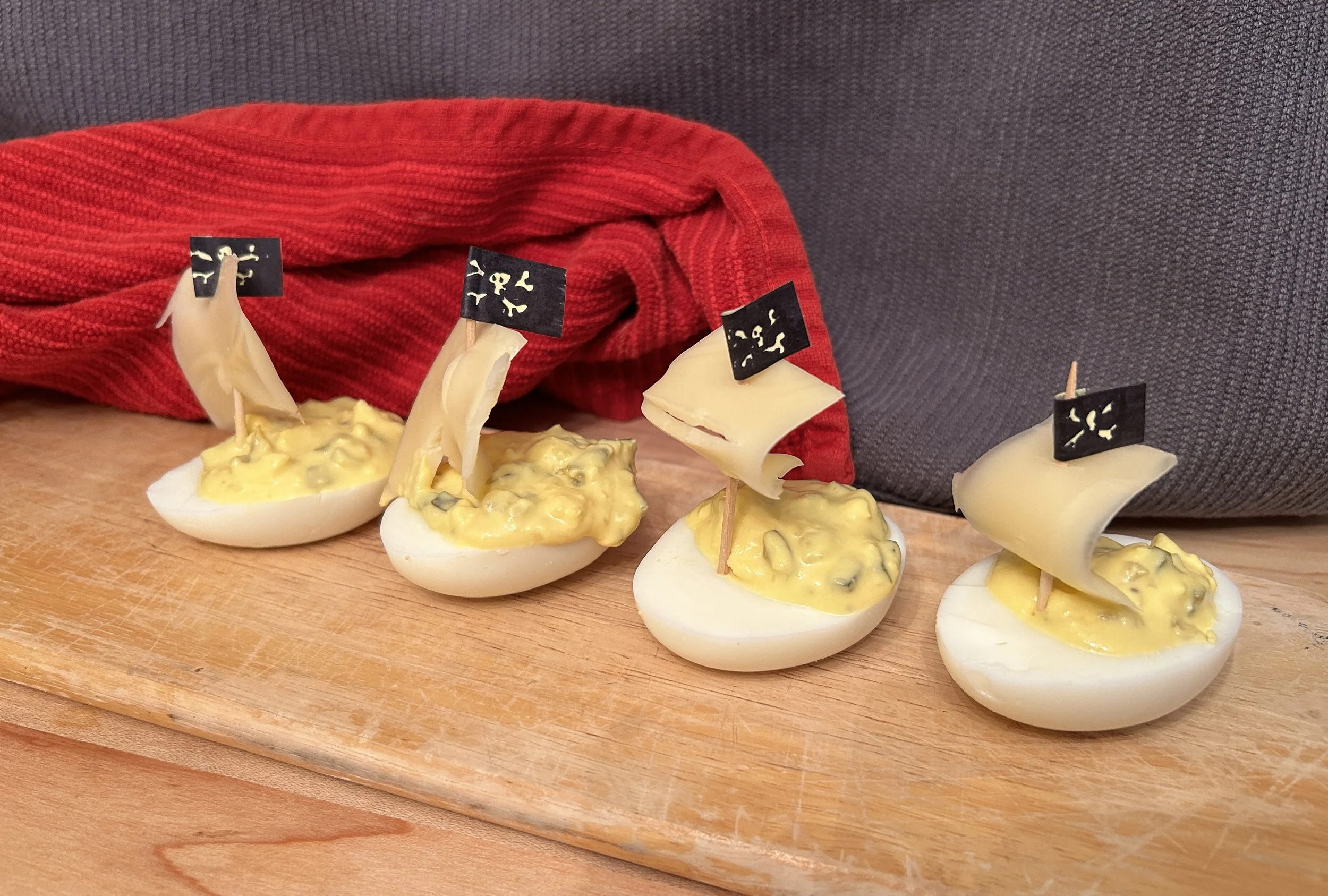
Deviled Ships are a wonderful treat to start learning how to cook with boiling water. It is a perfect snack to introduce slightly more mature children into the kitchen and show them how to begin cooking on the stove top. Deviled eggs are an incredibly popular dish throughout the United States and are perfect as a swash buckling snack with the simple addition of a cheese sail and a small paper pirate flag.
Ingredients
Eggs
Water
Mayonnaise of your choosing
Mustard of your choosing
Pickle relish or preferred relish
Sliced cheese of your choosing
Tooth Pics
A pot large enough to fit your desired amount of eggs plus enough room for water to reach a gentle boil.
A bowl large enough to fit eggs
Ice
1) Place eggs in a pot and fill with water till the eggs are covered by half an inch to an inch of water. Set the water on the stove top and bring to a gentle boil. Once the water begins to boil, turn the heat off and put a lid on top of the pot, letting the eggs remain in the hot water for 10 minutes.
2) Once the eggs have been in the bath for the allotted amount of time, add ice and water to a fresh bowl. Carefully with tongs remove the eggs from the boiling water and place them into the ice bath.
3) Let the eggs sit in the ice bath for a few minutes before removing the eggs from the water and taking off the shell. To remove the shell gently crack the egg on a hard surface all the way around and begin to pick off the pieces of the shell. Sometimes this is extremely easy and the shell comes off in large smooth chunks. Other times, it can be extremely difficult coming off in small chunks and breaking the skin of the egg underneath. If this happens, know that you did nothing wrong. It is simply the gamble of boiling eggs.
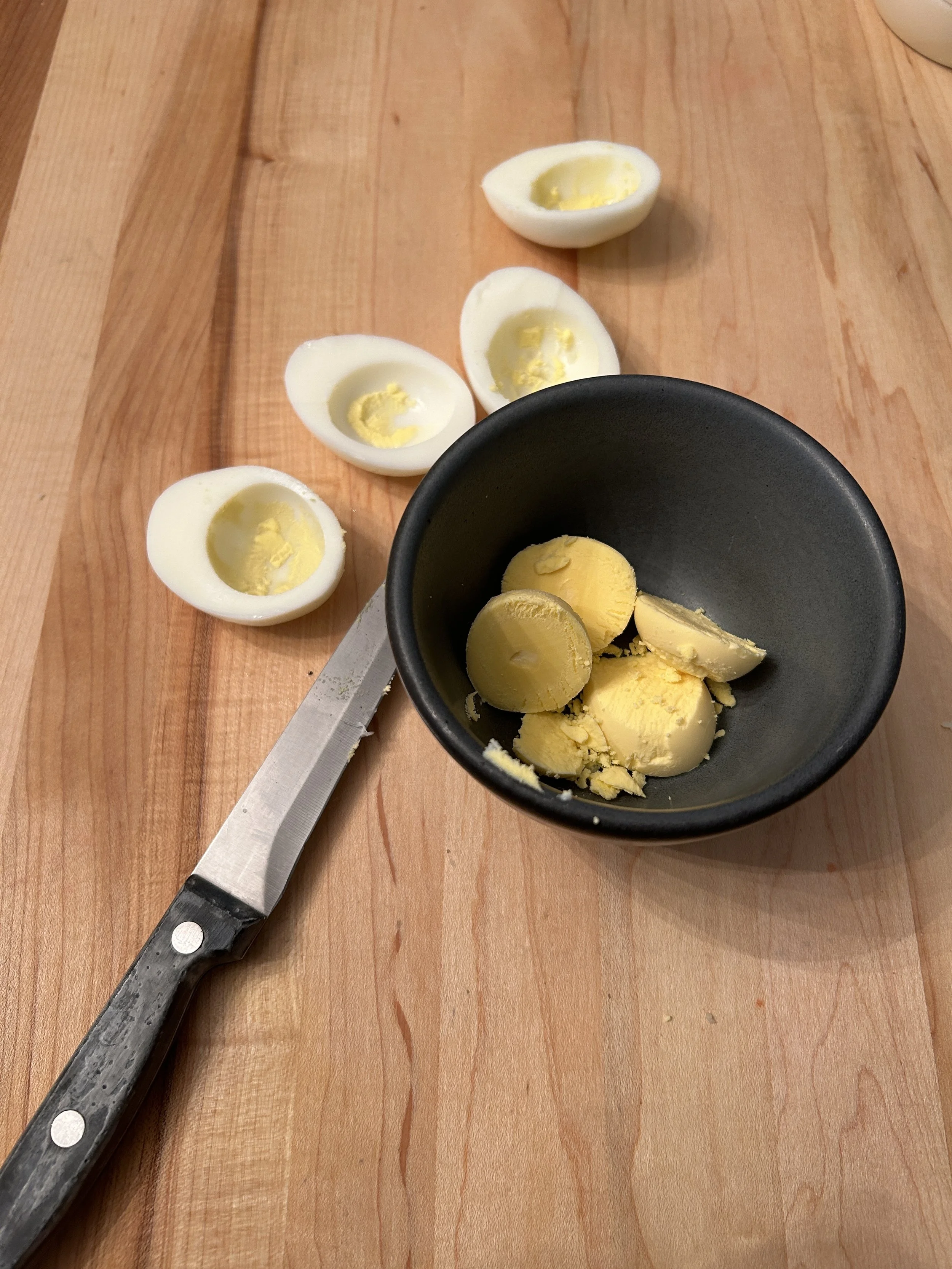
4) Once the shells have been removed, cut the eggs in half, long ways and move the yellow yolks into a bowl. Place the whites of the eggs aside; these will be our “ships” once the yolk mix is made.
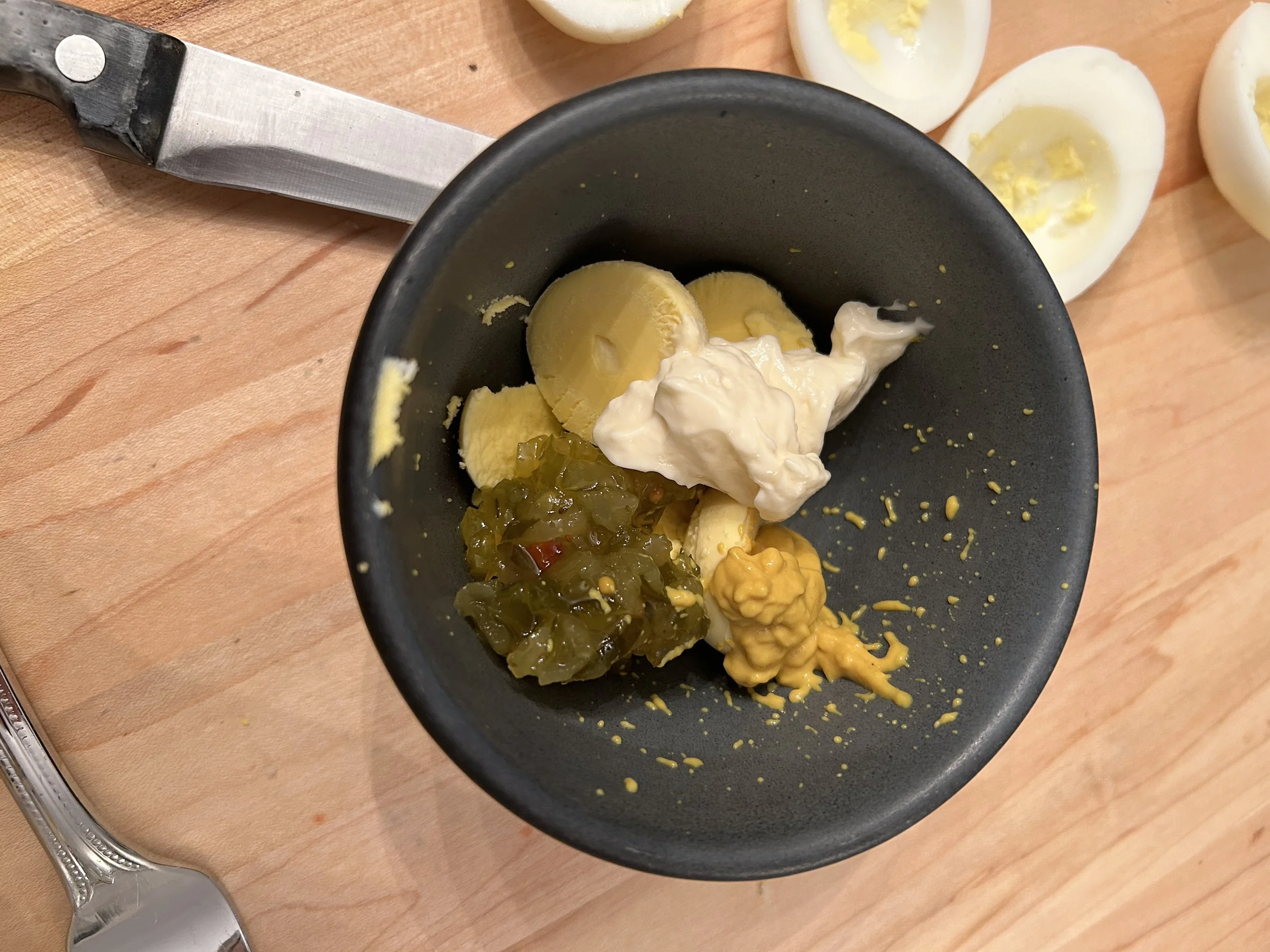
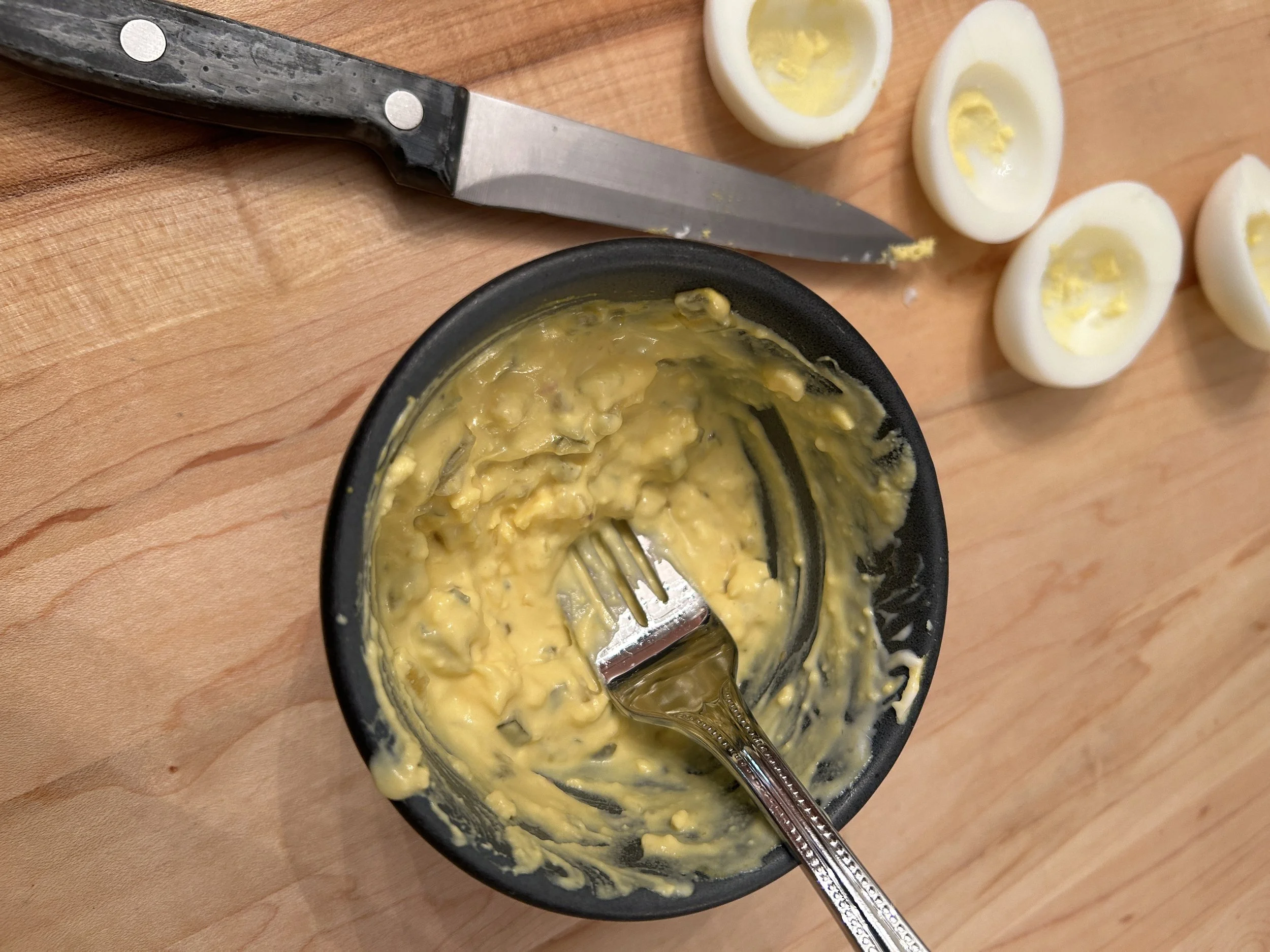
5) In the bowl with the yolks, gradually mix your mayonnaise, mustard and relish to taste and consistency. The taste will vary depending on how you like to make it. I prefer my deviled eggs made with slightly more relish. The consistency should not be overly runny and similar to cake frosting.
6) Once the mix is made, fill the white of the egg’s cavity with the yellow mixture. This can be done with a spoon or a piping bag. If with a piping bag, simply take a small Ziploc bag and fill it half of the way full with your yolk mixture. Cut a small hole in one of the corners of the bag and squeeze the bag with the back firmly twisted and pinched off so as to prevent the yolk mixture from coming out the back.
7) Cut a slice of cheese into a square piece approximately 1 inch by 2 inches, and thread both ends through a skewer 9or tooth pick to create a ship's sail.
8) It may also be fun to add a small paper flag on the top - whatever Jolly Roger you find most enjoyable.
Enjoy the movie!
Alice in Wonderland
Book
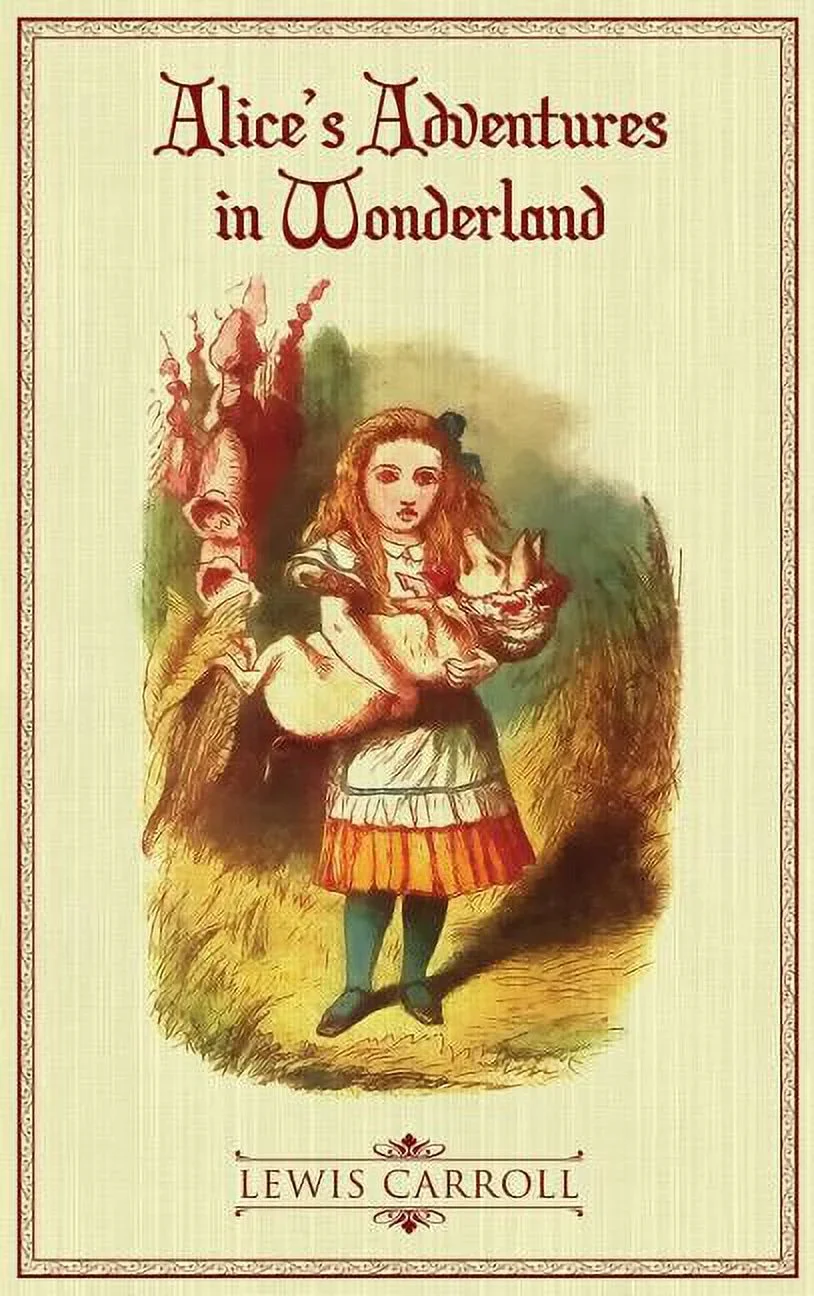
Alice In Wonderland by Lewis Carroll is a whimsical novel and can be enjoyed by children and adults of all ages. This charming little novel was originally published in 1865 and follows the adventures of a little girl named Alice who falls asleep and dreams that she follows a white rabbit down into a magical world called Wonderland. During her adventure, she encounters a myriad of people and places that don’t make any sense. Things like cats that talk, mad hatters who sit at a never-ending tea party, mock turtles, walruses, dodos, queens obsessed with cherry tarts and living decks of cards. Throughout her journey she realizes how scary and silly it can be if the world did not follow any kind of order and anything could be and do whatever it wanted.
The novel is remarkably short, standing at only 116 pages and is perfect for a fun family adventure. Reading this book together as a family can present an interesting opportunity for a variety of talking points. With older children, it could be interesting to discuss what a world without rules could look like and what the consequences of such a place might be, as throughout the story, Alice is faced with a similar idea and is put face-to-face with the consequences of such a desire. With younger children, it could be an opportunity to explore and discuss how the imagination can be used for fun as well as give us endless opportunities to create things out of the ordinary with only our minds.
Movie
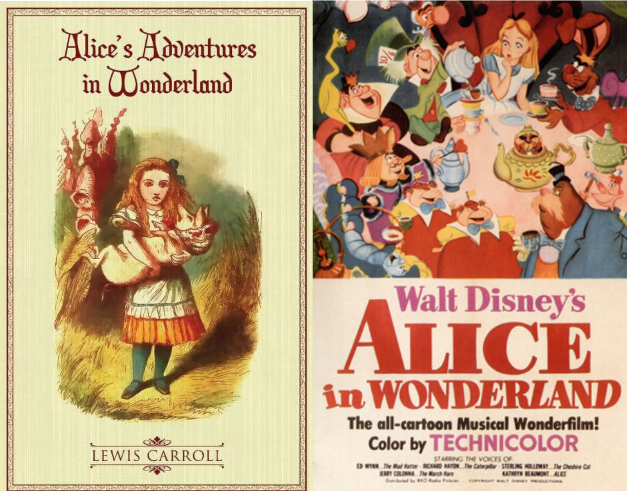
Alice in Wonderland has been adopted hundreds of times with the first adaptation dating all the way back to 1903. However, the recommended adaptation that we will be talking about today is the classic 1951 Alice in Wonderland produced by Walt Disney. This charming movie is bright, cheerful, enthusiastic, bizarre, and fits the basic plot of Lewis Carroll’s Alice in Wonderland. Alice falls down the rabbit hole and afterwards is confronted with a myriad of strange and bizarre people and events that culminates in a trial to determine who stole the Queens of Hearts’ tarts, resulting in Alice waking up when she is piled on by a deck of cards. This being said though, it is the recommended version of the story to accompany the book, there are a myriad of other adaptations which can be chosen from that may be more entertaining to you and your family. There are longer adaptations, newer adaptations, far more bizarre adaptations, and some adaptations that do not follow the events of the book whatsoever. It should be noted though that most of these adaptations are entertaining, but some of them may be considered far scarier than others, such as the 1933 version by Paramount Pictures known for its disturbing choice of make-up and costumes. The visuals give the movie a bizarre, almost frightening look at Wonderland. The 2010 Tim Burton adaptation follows an adult Alice as she returns to Wonderland; it is more inspired by the continued poetry of Lewis Carroll than Alice in Wonderland or Alice Through the Looking Glass (the sequel to Alice in Wonderland).
Rating
Though the book may contain some slightly disturbing aspects, such as a queen who insists on running around cutting people’s heads off whenever they displease her, an instance where a baby turns into a pig, and Alice being chased by a butcher, it is not a particularly scary book. Most of the time Alice never seems to be afraid of anything that is happening, though she is confused and upset to the point of tears by things not being as they should. The 1951 movie removes many of these more uncomfortably bizarre scenes creating an even more child friendly adaptation of the story. For that reason, the book and the movie (the movie originally being rated G) will be given a rating of G, as it is appropriate for all audiences.
Movie Night Treat
Bread and Butterflies
It is always fun to make treats to eat while you watch a movie. It creates a fun way to bring the story to life, as well as a way to teach young children how to begin preparing food for themselves. This simple treat is easily accomplished by children of all ages, and is simple, delicious, and can be modified in a variety of ways to accommodate food preferences.
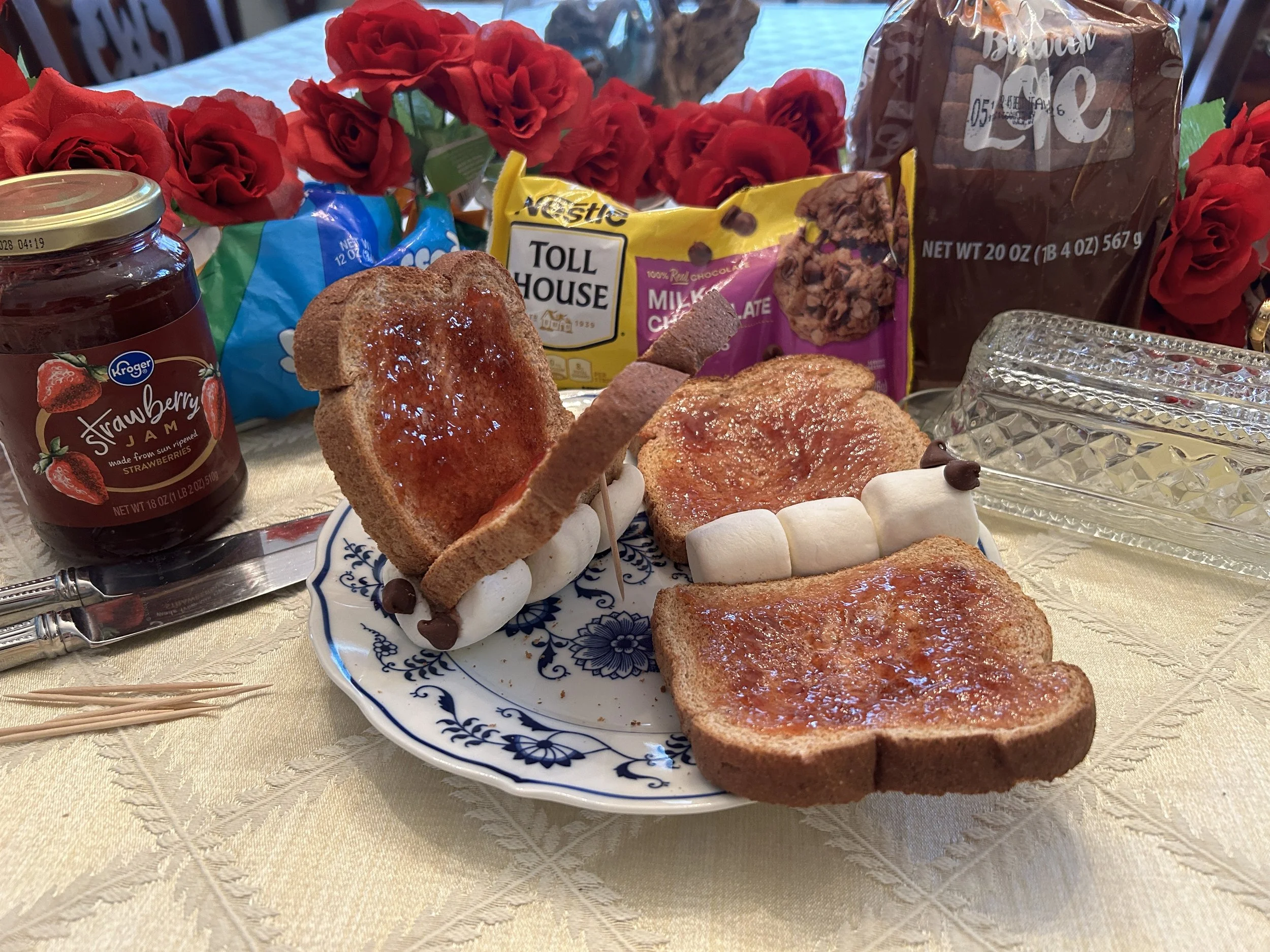
Though Bread and Butterflies do not appear in the novel by Lewis Carroll, they do appear in the Disney adaptation and are wonderfully adorable and simple to make in real life.
Ingredients
Favorite kind of sliced bread
Butter
Your favorite flavor of jam, honey, or nut butter
Marshmallows (medium or large)
Any small garnish such as raisins, other dried fruit, chocolate chips, or seeds
Toothpicks
Two butter knives
1) Gather ingredients and let the butter come to room temperature before use.
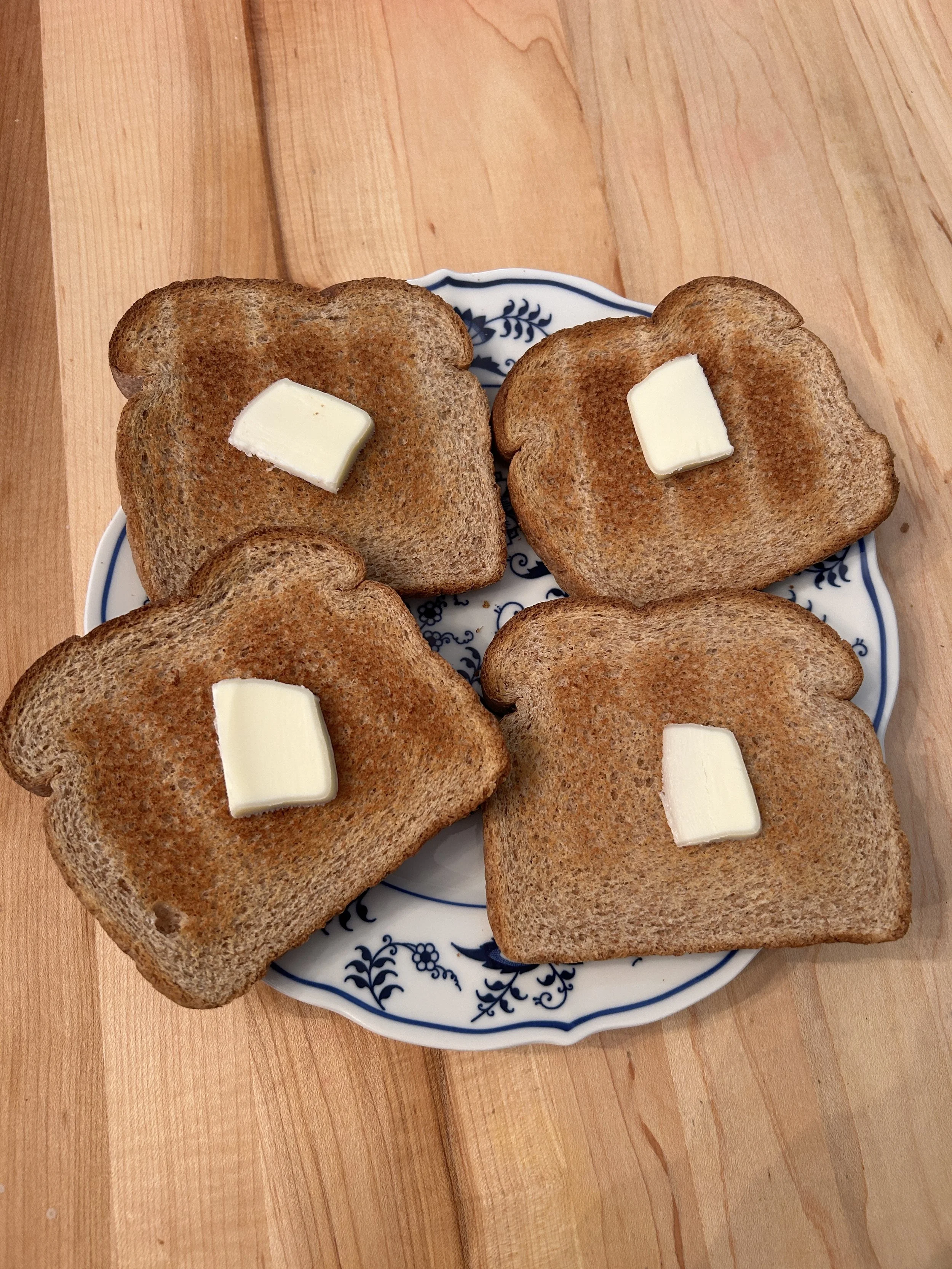
2) Toast two slices of bread per person and butter as soon as they come out of the toaster to ensure that the butter melts. If the butter is too cold it will not spread nicely on the toast. (It is essential that you do not use too much butter as this will completely saturate the bread and prevent the toast from staying upright later on). Once the toast is buttered place on a cooling rack so that sweat of the bread does not accumulate between the plate and the toast.
3) Once the toast has completely cooled, spread your choice of jam, honey, or a thin coat of nut butter (peanut butter weighs more than jam or honey would and if you would like to attempt the gravity defying stunt of the butterfly wings keep this in mind).
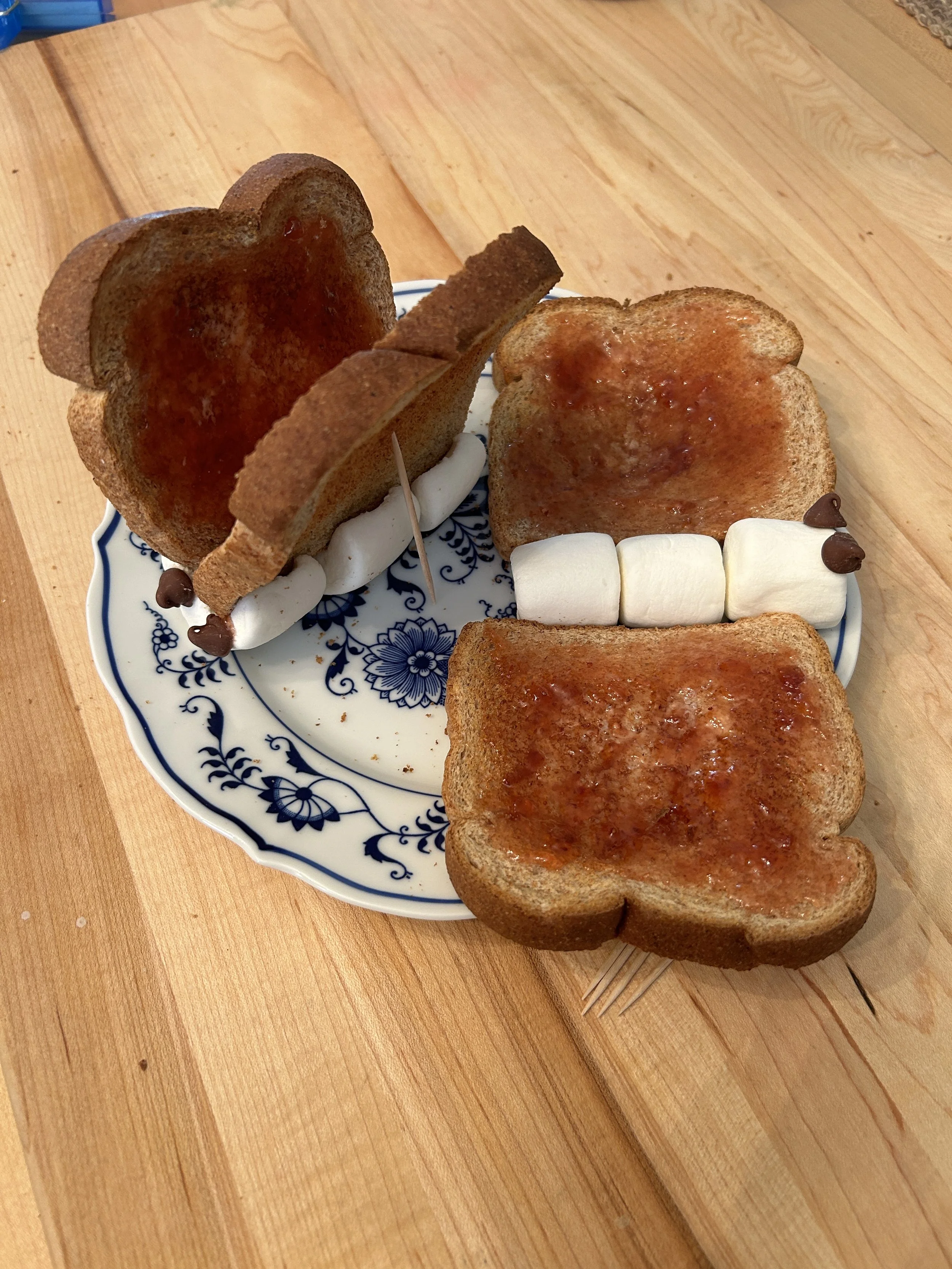
4) Take three medium size marshmallows or two large marshmallows and split them halfway down the middle.
5) Spread the marshmallows apart and place the toast (Jam sides together) into the crack of the marshmallow (please note that this is not the most stable of treats and will be greatly benefited by the implementation of a toothpick to prop up the wings. If you are making this treat with young children, the toothpick is not advised). If the butterfly wings are too heavy to sandwich between the marshmallows, instead lay the butterfly wings down flat on the plate with marshmallows aligned between the two slices.
6) Chocolate chips, raisins, seeds, or any other small edible decoration may be used to create the eyes. These can be attached by placing a small amount of your jam onto the back of the decoration and placing them on the face of the butterfly. If the wings will not be gravity defying, they may also be decorated with any of the small treats to give the wings a pattern.
Enjoy the movie!